How to Build Your First AI Automation Workflow
Plan a safe first AI automation workflow by mapping the task, human review point, output, testing process, and stop conditions before choosing tools.


Your first AI automation workflow should solve one narrow repetitive task, keep a human in charge of judgment, and include a simple way to test whether the output is useful before it reaches a real customer, client, or public channel. Do not begin by choosing the most advanced tool. Begin by describing the task, the input, the decision points, the output, the review step, and the failure conditions.
This decision-first approach helps beginners turn a repetitive task into a safe automation plan. It also prevents a common beginner mistake: connecting apps together before understanding what should happen when the AI is uncertain, wrong, incomplete, or working with sensitive information. NIST's AI Risk Management Framework organizes risk-management activity around Govern, Map, Measure, and Manage, and those ideas can be scaled down into a beginner-friendly checklist for planning a small workflow.
Start With One Repetitive Task
Choose a task that happens often, has a clear input, and produces an output that a human can review. Good first examples include sorting contact form messages, drafting replies to common inquiries, summarizing meeting notes, organizing product descriptions, creating first-pass social captions, or extracting action items from support emails.
Avoid starting with tasks that make final decisions about money, admissions, hiring, medical advice, legal advice, grades, or account access. Those workflows need stronger governance, testing, privacy review, and escalation rules than a beginner exercise can provide. Your first automation should reduce manual effort while keeping accountability clear.
Use this filter:
- Can I explain the task in one sentence?
- Can I provide three realistic input examples?
- Can a person quickly judge whether the output is acceptable?
- Can I stop the workflow before it sends, deletes, charges, publishes, or changes records?
- Can I identify what should happen when the AI is unsure?
If the answer to any question is no, narrow the task. For example, “automate my freelancing business” is too broad. “Draft a polite first response to new website inquiry emails, then save it for manual review” is a practical first AI automation workflow.
Map the Workflow Before Selecting Tools
Mapping means writing the workflow as steps before building it. The NIST AI RMF Core describes the Map function as establishing context, purpose, use, assumptions, limitations, and risks around an AI system. A beginner workflow can use the same habit without turning the project into a compliance exercise.
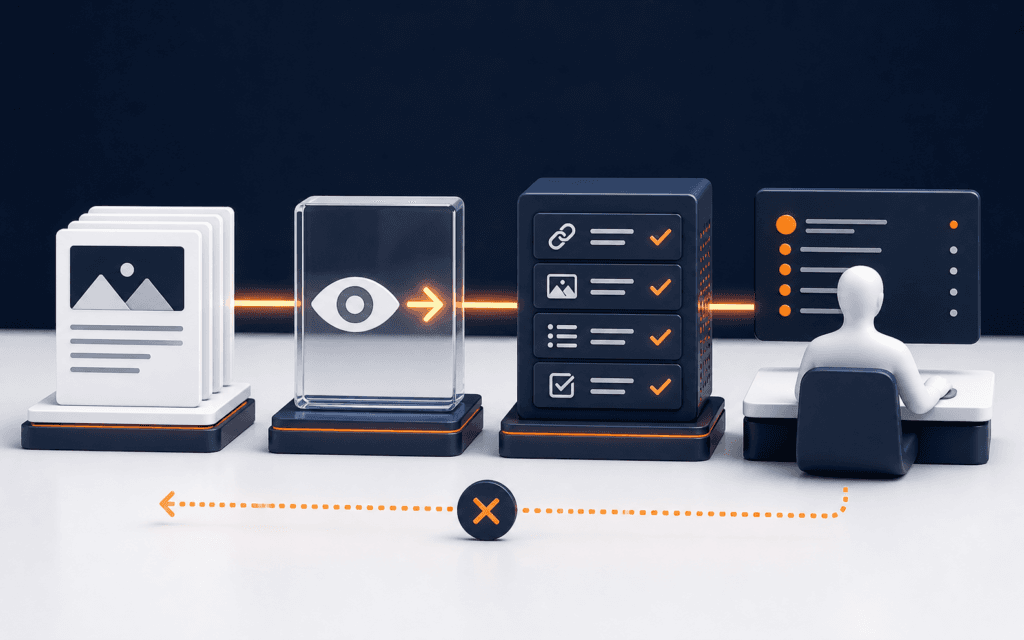
Create a simple workflow map:
- Trigger: What starts the workflow?
- Input: What data enters the workflow?
- AI task: What should the model do?
- Rules: What constraints must it follow?
- Human review: Who checks the result?
- Output: Where does the reviewed result go?
- Log: What should be recorded for later review?
- Stop condition: When should the workflow refuse to continue?
For a first workflow, the trigger might be a new form submission. The input might include a name, email, project type, budget range, deadline, and message. The AI task might be to classify the inquiry and draft a short response. The rule might say: do not promise price, availability, delivery date, or acceptance. The human review step might be the freelancer reading and editing the draft before sending.
This map is more valuable than a tool list. Once you can explain the workflow, it becomes easier to choose whether you need Zapier, Make, n8n, a spreadsheet, a CRM, a custom script, or only a prompt template.
Define Human Roles and Review Points
Beginner automation should not hide responsibility. NIST’s AI RMF Core includes outcomes around documented roles and responsibilities for human-AI configurations and oversight. In a small workflow, this means naming who owns setup, review, approval, and correction.
A clear role plan might look like this:
| Role | Beginner workflow meaning |
|---|---|
| Owner | Decides what the workflow is allowed to do |
| Reviewer | Checks AI output before it is used |
| Maintainer | Updates prompts, examples, and rules |
| Escalation contact | Handles uncertain, sensitive, or failed cases |
For a solo student or freelancer, one person may hold every role. Still, writing the roles down matters because it keeps the workflow honest. It reminds you that AI output is not the final authority and that some cases should move back to manual handling.
Add review points at the highest-risk moments. If the workflow only labels emails as “sales inquiry” or “support question,” the review can be light. If the workflow drafts a message to a client, review before sending. If the workflow updates records, review before writing. If the workflow uses personal data, review what data is necessary and what should be excluded.
Write the Prompt as Operating Instructions
A useful prompt is not only a request. It is the operating instruction for a small process. It should tell the AI what role it has, what input it receives, what output format to produce, what to avoid, and when to say it cannot complete the task.
For the inquiry-response example, a beginner prompt could include:
- Task: classify the inquiry and draft a first response.
- Tone: professional, friendly, brief, no pressure.
- Constraints: do not quote a price, promise a deadline, or claim availability.
- Required output: category, urgency, missing information, draft reply.
- Stop rule: if the inquiry asks for legal, medical, or unsafe advice, mark it for manual handling.
A prompt like that is easier to test because the output has a known shape. It is also easier to improve. If the draft replies are too long, adjust the length rule. If the AI misses budget details, add examples. If it invents availability, strengthen the constraint and include a negative example. The Prompt Engineering course develops this structured approach, while AI Automation and Agent Development extends it into complete workflows with tools, state, review, and recovery.
Keep examples realistic. Use three to five sample inputs that match the actual messages you expect. Include ordinary cases, incomplete cases, and cases that should be escalated. A workflow that works only on perfect examples is not ready for real use.
Build the Smallest Safe Version
The first build should do less than the final idea. For many beginners, the safest first version is “draft and save” rather than “generate and send.” It proves whether the AI can help without giving it permission to act on the outside world.
Build in this order:
- Manual test: paste sample inputs into the prompt and review output.
- Structured input: move examples into a repeatable form, spreadsheet, or app trigger.
- Draft output: save the AI result somewhere visible.
- Human review: approve, edit, or reject the draft.
- Logging: record input type, output status, review result, and correction notes.
- Limited automation: only after testing, connect the next action.
This sequence reflects a useful risk habit: separate generation from action. The AI can produce suggestions, summaries, or drafts, but a human reviews before anything is published, sent, deleted, or changed. That boundary is especially important for freelancers and students who are still learning how the tool behaves.
The first workflow does not need many integrations. A form, a spreadsheet, a prompt, and a review folder can teach the core skill. Once the logic is reliable, you can move to stronger automation tools.
Test With Good, Bad, and Ambiguous Inputs
NIST's AI RMF Playbook connects risk-management outcomes with suggested actions and emphasizes planning for testing, evaluation, verification, and validation. For a beginner workflow, that means testing the automation with more than the ideal example.
Use at least three test groups:
- Normal inputs: messages the workflow should handle.
- Incomplete inputs: missing budget, unclear request, vague deadline, no contact detail.
- Escalation inputs: sensitive data, angry message, legal request, refund demand, unrealistic promise request.
For each test, ask:
- Did the workflow classify the case correctly?
- Did it follow the constraints?
- Did it avoid invented facts?
- Did it ask for missing information when needed?
- Did it stop when it should stop?
- Could a reviewer understand why the output was produced?
Keep a short test log. You do not need a complex dashboard. A table with input type, expected behavior, actual behavior, pass or fail, and correction is enough. If the same failure repeats, fix the workflow before adding more automation.
Manage Risk After the Workflow Is Running
Risk management should continue throughout the system lifecycle, not only during setup. In beginner terms, that means the workflow needs maintenance. Prompts drift from the real task, business rules change, tools update, and users send inputs you did not expect.
Set a simple review rhythm. After the first week, read a sample of outputs and note corrections. After the first month, decide whether the workflow should stay as a draft-only assistant, move to a stronger review process, or be retired. If the workflow touches customer information, review what data is stored and whether it is still needed.
Watch for warning signs:
- The AI invents details the input did not provide.
- Reviewers accept output without reading it.
- The workflow handles cases outside its original scope.
- Corrections repeat but prompts are not updated.
- The automation saves sensitive information unnecessarily.
- A tool update changes the output format.
These signs do not always mean the workflow is bad. They mean it needs adjustment. A safe beginner workflow is allowed to be modest. Reliability matters more than complexity.
A Practical First Workflow Example
Suppose a web design student receives inquiry messages through a portfolio form. The goal is to reduce the time spent sorting inquiries and writing first replies.
The workflow could be:
- Trigger: new form submission.
- Input: name, email, message, project type, timeline, budget field.
- AI task: classify the inquiry, list missing details, draft a reply.
- Rule: never promise a price, delivery date, discount, or acceptance.
- Stop condition: if the message includes legal, medical, payment dispute, or abusive content, mark it for manual handling.
- Output: save the draft in a review sheet.
- Human action: student edits and sends manually.
- Log: record whether the draft was accepted, edited, or rejected.
This is a good first workflow because it has a clear task and a clear boundary. It saves time but does not remove human judgment. It teaches mapping, prompting, testing, review, and maintenance without pretending to be a production-grade AI system.
This topic also has a local training use for students in Gujrat, Punjab, Pakistan: this workflow can be compared with practical exercises in the AI Automation and Agent Development. Confirm current batch requirements directly and judge the learning path by inspectable work.
Questions Readers Often Ask
How does a first AI automation workflow work?
It works by connecting a narrow trigger, structured input, AI instruction, review step, and controlled output. The AI handles a defined part of the process, while a human remains responsible for approval, exceptions, and improvement.
What should beginners avoid automating first?
Avoid final decisions, sensitive advice, payments, account changes, public publishing, and tasks where errors could harm a person or business relationship. Start with drafts, summaries, classifications, and internal organization.
Next Step
Pick one repetitive task and write its workflow map before opening any automation tool. If you cannot define the trigger, input, AI task, review step, output, and stop condition, the task is not ready for automation yet. Narrow it until the first safe version can be tested with real examples and reviewed by a person.
Want to Build Practical Technology Skills?
Explore RisingEdge courses designed to help students learn real skills, build projects, and prepare for career opportunities.