AI Content Source Ledger: Claims, Evidence, Reverification.
An AI content source ledger is a compact record that connects each material claim to the evidence a human reviewer actually checked. It should identify the claim, source.

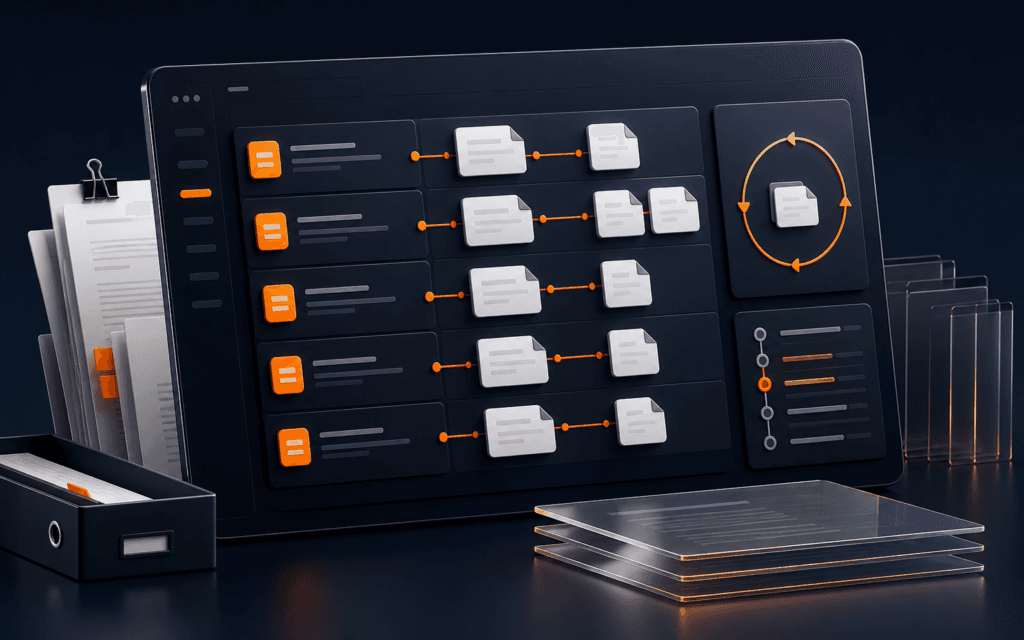
An AI content source ledger is a compact record that connects each material claim to the evidence a human reviewer actually checked. It should identify the claim, source, publisher, authority, access date, supported scope, limitations, transformation into copy, reviewer, approval, next reverification trigger, published locations, and correction status. The ledger is evidence for editorial decisions; an AI answer, prompt transcript, or bibliography is not.
Use the ledger to make a justified choice about whether a claim is publishable, needs qualification, requires a stronger source, or should be removed. Keep personal data, credentials, copyrighted source copies, and full drafts out of the ledger. Store concise paraphrased evidence and stable references, preserve authorized provenance where available, and maintain a correction path when facts or source pages change.
Define What Belongs In The Ledger
Track claims that affect a reader’s decision, safety, cost, eligibility, technical implementation, comparison, or understanding. Examples include a current feature, price, legal requirement, research finding, compatibility statement, deadline, certification condition, or measured result. Do not create a row for every ordinary sentence.
Separate a claim from its source and from the final wording. One source may support several bounded claims, while one claim may need several sources. The ledger should show the relationship explicitly so a reviewer can tell what was verified without reopening an AI conversation or reverse-engineering the draft.
Create A Claim Record Before Drafting
Give each material claim a stable ID. Record a neutral claim statement, content owner, intended audience, risk level, and publication destination. Mark it proposed until evidence is reviewed. Avoid writing the persuasive headline first and then searching for a source that appears to agree.
Define the acceptable evidence before research: official documentation for a product behavior, primary research for a study result, or an authorized policy for an institutional requirement. Secondary analysis can explain context, but it should not silently replace a source with direct authority over a changing fact.
Capture Source Identity And Scope
Record the canonical URL, title, publisher, source type, publication or update date when available, access date, version, and authority tier. Add the exact bounded point the source supports and what it does not support. Keep notes paraphrased and short rather than copying entire pages.
A credible publisher does not make every sentence on its site equally authoritative. Distinguish a specification, help article, marketing page, user comment, and archived announcement. If the source has no date, unstable URL, or unclear ownership, record that limitation and shorten the reverification interval.
Verify The Claim Outside The AI Output
Open the source itself and locate the supporting context. Confirm definitions, conditions, jurisdiction, version, population, date, and exceptions. Compare multiple primary sources when the claim spans separate authorities. Never cite a URL merely because an AI system returned it.
Record whether the evidence fully supports, partially supports, contradicts, or does not address the claim. Partial support requires narrower wording. Contradiction requires escalation or removal, not a blended sentence that hides disagreement. Preserve a reviewer note explaining the decision.
Track Transformations Into Published Copy
Store the approved paraphrase or a hash and path to the governed content package rather than a full article body in compact databases. Record material transformations such as simplifying a technical definition, converting units, combining sources, or adding an example. Each transformation must preserve scope and uncertainty.
Link every published page, graphic, email, or script that uses the claim. This impact map makes correction possible. If the same fact is copied into ten places without a shared record, a later update becomes a search exercise and inconsistent versions remain public.
Record AI And Human Roles
Document which stages used generative AI, such as query planning, summarization, drafting, or style revision, and which human reviewed evidence and approved publication. NIST’s risk guidance emphasizes governance, testing, provenance, and disclosure as operational considerations rather than a single magic label.
Do not treat a named reviewer as a guarantee. Record the review performed, date, evidence, limitations, and decision. Assign accountable owners for high-impact claims and correction authority. Minimize personal data and use role-based identifiers when individual names are unnecessary.
Use Provenance Without Overclaiming
Content Credentials can provide tamper-evident information about an asset’s history, creator tools, and modifications. The C2PA explainer also makes an important limitation clear: provenance does not independently prove that depicted or written content is factually true.
Record a Content Credential or other provenance signal as one evidence field, not as the claim’s factual source. Validate it with supported tools, note what assertions are present, and preserve privacy. Missing provenance is not automatic proof of deception, and present provenance is not automatic proof of accuracy.
Set Freshness And Reverification Triggers
Assign a review date or event trigger based on volatility and impact. Product pricing, API behavior, admissions schedules, regulations, and active policies need closer review than stable conceptual explanations. Useful triggers include a vendor release, policy revision, broken link, reader report, scheduled audit, or detected content change.
At reverification, compare the current source with the recorded claim and published wording. Record unchanged, narrowed, expanded, superseded, unavailable, or contradicted. Do not overwrite the old decision without history; keep enough audit information to explain why content changed.
Define A Minimum Practical Schema
A useful row can contain claim ID, neutral claim, risk, evidence URL, publisher, source type, version or date, access date, support status, supported scope, limitations, reviewer role, decision, approved wording reference, publication locations, next review, trigger, and correction state. Use controlled values for status fields so unresolved and approved cannot be confused by spelling variations.
Keep the ledger compact and permission-aware. Hash or reference governed content artifacts instead of storing full drafts. Store only the source excerpt needed for fair, lawful evidence review, preferably as a short paraphrase with a locator. Restrict sensitive rows and avoid recording prompt transcripts that may contain confidential instructions, personal data, or copyrighted source text. Back up changes and preserve event history for material decisions.
Resolve Conflicting Sources
When sources disagree, do not ask the AI system to choose the most confident wording. Check whether the sources address the same version, date, jurisdiction, population, definition, or product tier. Give direct authority more weight for its own current policy, and original research more weight for its measured result, while recording limitations and later corrections.
Create a conflict record with each bounded claim, source, authority, freshness, and interpretation. The decision may be to narrow the statement, present the disagreement, seek an owner, delay publication, or remove the claim. Record who resolved it and what new evidence would reopen the decision. This prevents an editor from silently selecting the source that best fits the planned headline.
Design A Correction Workflow
Define who can pause publication, edit content, add a correction note, notify downstream owners, and close an incident. Prioritize errors that could cause harm, financial loss, technical failure, or a materially wrong decision. Preserve the original claim ID and link the correction event to every affected location.
A correction record should state what was wrong, what changed, when, why, and what evidence now applies. Avoid silently changing a material claim when readers may have relied on it. Not every typo needs a public notice, but every substantive correction needs internal traceability.
Audit The Ledger For False Confidence
Sample published claims and try to reproduce the approval from the ledger alone. Fail rows with missing evidence, dead links, ambiguous support, expired review dates, copied AI citations, unsupported certainty, or no correction owner. Check whether lower-risk claims are documented efficiently while high-risk claims receive deeper review.
Do not turn the ledger into a score that rewards paperwork volume. Measure whether it helps reviewers reject weak claims, find affected content, reverify efficiently, and correct transparently. A small complete record is better than a large bibliography with no claim mapping.
Apply It To A Course Comparison
Suppose an article compares two training options. Create separate rows for current duration, delivery mode, prerequisites, assessment, certificate wording, fees, and refund conditions. Use the authorized page or direct institutional confirmation for each changing fact and record the access date and batch context.
If one page lacks a current fee, the justified decision is to state that the reader must confirm it, not to infer a number from an older post. Link the final article locations and set reverification before the next admissions cycle. This example shows how the ledger protects both accuracy and useful uncertainty.
Integrate The Ledger With Editorial QA
Before publication, require all high-impact claim rows to be approved and all unresolved conflicts to be visible. The AI content quality checklist can govern the wider brief, draft, review, and improvement process while the ledger supplies claim-level evidence.
A relevant AI Content Generation course can provide structured practice with responsible workflows. Production teams still need source policies, permissions, correction ownership, and risk thresholds suited to their content and audience.
A source ledger is also a useful working artifact for projects in the Artificial Intelligence (AI) program. It helps a learner separate model output from verified information and makes later review more precise.
This topic also has a local training use for students in Gujrat, Punjab, Pakistan: the practical approach in this article can be compared with practical exercises in the Artificial Intelligence (AI). Confirm current batch requirements directly and judge the learning path by inspectable work.
FAQ
Is a list of sources the same as a source ledger?
No. A ledger maps bounded claims to checked evidence, limitations, reviewers, published locations, and reverification or correction actions.
Do Content Credentials prove an AI image or document is true?
No. They can provide tamper-evident provenance assertions, but C2PA explicitly distinguishes provenance from a judgment that content is factually true.
How often should claims be reverified?
Use the fact’s volatility and impact. Trigger review sooner for changing prices, policies, versions, schedules, and high-impact advice, and whenever a source or published page changes.
Want to Build Practical Technology Skills?
Explore RisingEdge courses designed to help students learn real skills, build projects, and prepare for career opportunities.