From Design Brief to Brand Kit: A Beginner Graphic Design Project
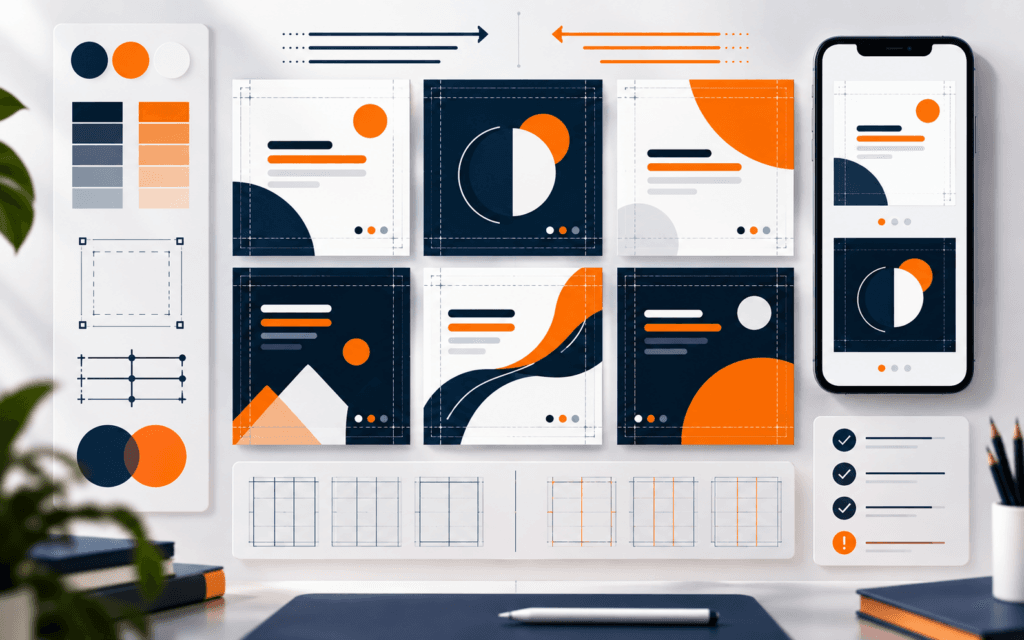
A beginner brand-kit project should turn one constrained business brief into a usable visual system: logo variants, color roles, typography rules, two repeatable templates, and an.


A beginner brand-kit project should turn one constrained business brief into a usable visual system: logo variants, color roles, typography rules, two repeatable templates, and an organized export package. The design is successful when every choice traces to the brief and another person can use the kit consistently.
This workflow produces portfolio evidence for reasoning, iteration, accessibility, and delivery rather than an isolated logo. It also exposes whether files survive small sizes, monochrome use, different backgrounds, and independent opening. Keep a decision log as you work: record the criterion being tested, the option rejected, the reason for rejection, and the revision made. That log prevents the final case study from becoming a polished reconstruction that hides how the work developed.
Use a fictional local service business, permission-safe fonts and images, and original marks. A student project is not trademark clearance or a complete brand-strategy engagement. Preserve sketches and state that legal clearance would require a separate professional process.
What You Need Before You Start
Write a one-page brief before opening design software.
- Basic vector and raster editing
- A fictional audience and service offer
- Licensed fonts and permission-safe imagery
- An export checklist
Keep these boundaries in place:
- No copied logo concepts
- No trademark or legal-availability claim
- No decorative mockups used as proof of production quality
1. Convert the brief into design criteria
Action and reason: Extract audience, promise, personality, required uses, constraints, and prohibited cues. Criteria let reviewers judge fit instead of personal taste.
Inputs: The business scenario and delivery list. Treat these inputs as the working boundary; adding an unreviewed dependency changes the task and should trigger a new check.
Expected output: Five measurable criteria and a content hierarchy. Keep the artifact with the project so another person can inspect the decision instead of relying on a finished screenshot.
Verification: Testing whether each criterion can accept or reject a concept. Record the input, expected result, observed result, and decision. A pass is credible only when another person can repeat the same check.
Failure condition: The brief contains only modern and creative. Correction: Name the user, message, context, reproduction size, and practical limitation. Repeat the original verification after the correction and retain the failed observation as part of the evidence trail.
2. Develop and select logo directions
Action and reason: Sketch several structurally different ideas, refine three, and score them against the criteria. Iteration prevents the first attractive shape from becoming the answer.
Inputs: Word associations, thumbnail sketches, and monochrome constraints. Treat these inputs as the working boundary; adding an unreviewed dependency changes the task and should trigger a new check.
Expected output: One selected direction plus documented rejection reasons. Keep the artifact with the project so another person can inspect the decision instead of relying on a finished screenshot.
Verification: Testing silhouette, small size, one color, and unrelated-brand similarity. Record the input, expected result, observed result, and decision. A pass is credible only when another person can repeat the same check.
Failure condition: Selection depends on a mockup effect. Correction: Remove effects, compare plain marks, and return to criteria. Repeat the original verification after the correction and retain the failed observation as part of the evidence trail.
3. Build a controlled color system
Action and reason: Assign primary, accent, neutral, background, and text roles with exact values. A palette becomes useful only when roles and contrast are defined.
Inputs: The selected mark, screen and print contexts, and contrast checks. Treat these inputs as the working boundary; adding an unreviewed dependency changes the task and should trigger a new check.
Expected output: A compact palette with permitted combinations. Keep the artifact with the project so another person can inspect the decision instead of relying on a finished screenshot.
Verification: Checking text combinations and grayscale differentiation. Record the input, expected result, observed result, and decision. A pass is credible only when another person can repeat the same check.
Failure condition: Brand colors create unreadable text or too many competing accents. Correction: Adjust roles and values, reduce combinations, and recheck contrast. Repeat the original verification after the correction and retain the failed observation as part of the evidence trail.
4. Define typography and layout rules
Action and reason: Choose licensed typefaces and specify heading, body, label, spacing, and alignment behavior. Consistent typography carries more daily brand work than the logo.
Inputs: Realistic short and long content samples. Treat these inputs as the working boundary; adding an unreviewed dependency changes the task and should trigger a new check.
Expected output: A type hierarchy and simple grid that survives different lengths. Keep the artifact with the project so another person can inspect the decision instead of relying on a finished screenshot.
Verification: Testing small screens, print size, and substituted fallback fonts. Record the input, expected result, observed result, and decision. A pass is credible only when another person can repeat the same check.
Failure condition: Decorative type harms body readability or hierarchy depends on color alone. Correction: Simplify the pairing and strengthen size, weight, and spacing roles. Repeat the original verification after the correction and retain the failed observation as part of the evidence trail.
5. Create two reusable templates
Action and reason: Apply the system to a social announcement and an A4 service sheet. Different formats reveal whether the kit is a system rather than one composition.
Inputs: The same message, image rules, logo clear space, and hierarchy. Treat these inputs as the working boundary; adding an unreviewed dependency changes the task and should trigger a new check.
Expected output: Editable templates with locked and variable areas. Keep the artifact with the project so another person can inspect the decision instead of relying on a finished screenshot.
Verification: Replacing content with longer text and another image. Record the input, expected result, observed result, and decision. A pass is credible only when another person can repeat the same check.
Failure condition: The template breaks when ordinary content changes. Correction: Increase flexible space, constrain crops, and remove fragile decoration. Repeat the original verification after the correction and retain the failed observation as part of the evidence trail.
6. Package and review the handoff
Action and reason: Export vector, PDF, SVG, PNG, and source assets with names, color modes, sizes, and a usage guide. Professional design includes reliable delivery.
Inputs: Approved artwork, font licenses, export presets, and folder structure. Treat these inputs as the working boundary; adding an unreviewed dependency changes the task and should trigger a new check.
Expected output: A clean brand-kit archive and one-page rules sheet. Keep the artifact with the project so another person can inspect the decision instead of relying on a finished screenshot.
Verification: Opening every export in independent software and matching it to the inventory. Record the input, expected result, observed result, and decision. A pass is credible only when another person can repeat the same check.
Failure condition: Fonts, links, transparent variants, or monochrome assets are missing. Correction: Repair the inventory, regenerate exports, and repeat the independent-open test. Repeat the original verification after the correction and retain the failed observation as part of the evidence trail.
Review the Evidence Before You Call It Complete
Run the work as a review, not as a presentation. Start with the promised outcome: Every choice traces to a brief criterion. Ask a second person to follow the documented inputs and checks without receiving a private explanation. Record where they cannot reproduce a result, where a decision lacks evidence, and where the artifact depends on hidden knowledge. Those gaps are part of the work and should be corrected before screenshots or portfolio copy are finalized.
Use the remaining acceptance criteria as release conditions: Logo works at small size and in monochrome; Color combinations retain readable contrast; Templates survive realistic content changes; Exports open correctly and match the inventory. A failed condition should identify the smallest upstream step that owns the defect. Correct that step, repeat the same check, and preserve the before-and-after result. This review discipline is what turns an exercise into credible evidence of skill without claiming client experience, production success, or testing that did not occur.
Completion Standard
Approve the kit only when it works without the original designer present.
- Every choice traces to a brief criterion
- Logo works at small size and in monochrome
- Color combinations retain readable contrast
- Templates survive realistic content changes
- Exports open correctly and match the inventory
A fictional Gujrat service business gives local learners realistic language and usage contexts without claiming a real client. The same production and accessibility standards should apply to work intended for any market.
When you want guided review of the complete workflow, the Graphic Design course provides a structured path from fundamentals to supervised project evidence. The article remains a self-contained method; the program is the next step for learners who need feedback, correction, and repeated practice.
Sources And Verification Notes
- Save artwork in Illustrator: Supports retaining editable native artwork and choosing delivery formats deliberately.
- Export for screens: Supports multi-format, multi-size asset export.
- WCAG 2.2 contrast guidance: Supports readable foreground-background contrast decisions.
FAQ
How many logo concepts should a beginner show?
Show enough distinct exploration to prove selection, then present only the strongest relevant alternatives. Three refined directions are more useful than many cosmetic variations.
What files belong in a basic brand kit?
Include editable source files, suitable vector exports, transparent and background PNGs, monochrome variants, color values, typography rules, templates, and a clear inventory.
Can mockups replace export testing?
No. Mockups demonstrate context, while export testing proves the actual asset opens, scales, and reproduces correctly. Review every export at its intended size and on a contrasting background before delivery.
Want to Build Practical Technology Skills?
Explore RisingEdge courses designed to help students learn real skills, build projects, and prepare for career opportunities.