Synthetic Test Data for AI Projects: Scenarios, Privacy, Coverage.
Synthetic test data for AI is an intentionally constructed set of examples used to exercise a model or workflow without copying production records into a learning environment. A.


Synthetic test data for AI is an intentionally constructed set of examples used to exercise a model or workflow without copying production records into a learning environment. A useful set preserves the task structure and difficult conditions, not the identity of real people. It records where each case came from, what it is meant to test, and what it cannot represent.
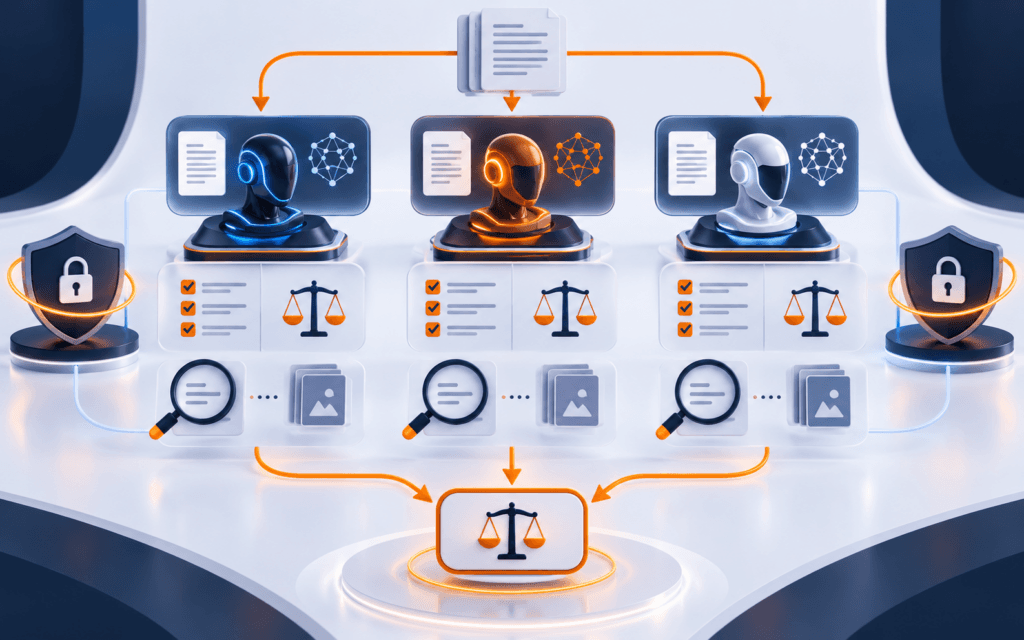
Synthetic does not automatically mean private, unbiased, realistic, or safe. A generator can reproduce memorized details, a human can accidentally adapt a recognizable record, and a neat sample can omit the messiest real conditions. Use a documented workflow: define scenarios, design a schema, create cases, review privacy, label expectations, measure coverage, separate holdouts, and report limits.
Define The Evaluation Question
Start with the behavior you need to test. Examples include extracting approved fields, classifying a request, grounding a summary in supplied text, or refusing an unsupported action. Name the user, input, expected output, and consequence of error. Avoid creating a general dataset for an undefined future model.
State excluded uses. A classroom set designed for form extraction should not be used to evaluate medical advice, hiring, credit, identity verification, or real customer service. Scope determines which fields, edge cases, reviewers, and safeguards are necessary.
Create A Scenario Inventory
List the ordinary, difficult, invalid, and prohibited situations the workflow may encounter. For a course-enquiry classifier, scenarios might include clear course interest, two courses, missing contact details, unrelated sales messages, abusive text, prompt injection, mixed languages, and requests needing a human.
Give each scenario an identifier, purpose, priority, expected route, and risk. The inventory is the source of truth for coverage. Do not begin by asking a model to generate one hundred examples; volume without a scenario design usually repeats easy patterns.
Design A Minimal Schema
Define fields that the task actually consumes: case ID, scenario, safe input, expected output, expected refusal or escalation, rationale, source method, reviewer, version, and notes. Use structured formats when automation will load the cases, and validate types and allowed values.
Do not include names, phone numbers, addresses, account identifiers, credentials, private URLs, or copied free text merely to make examples realistic. Use obviously fictional values and reserved domains. Keep sensitive production schemas out unless their use is explicitly authorized.
Choose A Construction Method
Cases can be written from requirements, transformed from public templates, generated from a scenario specification, or assembled through combinations of safe field values. Record the method per case. Human-written examples offer control; model-generated examples offer variety but require review and may reproduce patterns you did not intend.
When using a generator, provide scenario constraints and fictional-value rules, then inspect every output before it enters the set. Do not ask it to imitate a named customer, employee, or confidential document. Generation is a drafting step, not privacy certification.
Keep Production Records Out
Build in a separate authorized environment and block easy paths to production exports. Do not paste live tickets, analytics rows, emails, applications, or customer conversations into prompts. Redaction is difficult because indirect combinations can still identify a person or organization.
If real-data-derived statistics are necessary, obtain proper approval and use an appropriate privacy process. NIST guidance distinguishes de-identification governance from simply removing obvious identifiers. A beginner project should prefer fully invented cases rather than attempting an informal anonymization program.
Review For Memorized Or Recognizable Details
Search generated cases for real names, domains, addresses, phone patterns, account numbers, quoted passages, and organization-specific language. Compare against prohibited terms without storing private source content in the test repository. Escalate suspicious matches instead of editing them silently.
A fictional label does not make copied content safe. Replace the entire case when its origin is uncertain. Record the rejection category so the generation prompt or construction rule can be improved.
Write Expected Outcomes
For each case, define what success means before running the system. The expected result may be an exact field, one of several acceptable labels, a rubric, a refusal, or a human-review route. Include the reason so disagreements can be resolved against the requirement.
Separate objective labels from reviewer judgment. Extraction can often use exact comparison after normalization; summaries need criteria for source support, omissions, and prohibited additions. Do not invent a precise score where the task requires expert review.
Use Independent Review
Ask a second reviewer to inspect ambiguous cases, safety routes, and labels without seeing the system output first. Track agreement and discuss conflicts. When the requirement itself is unclear, revise the scenario and expected behavior rather than forcing a label.
Record reviewer qualifications and scope. A technical reviewer may validate schema and automation, while a domain owner determines whether the expected business route is appropriate. Neither should approve a high-impact use outside their authority.
Build A Coverage Matrix
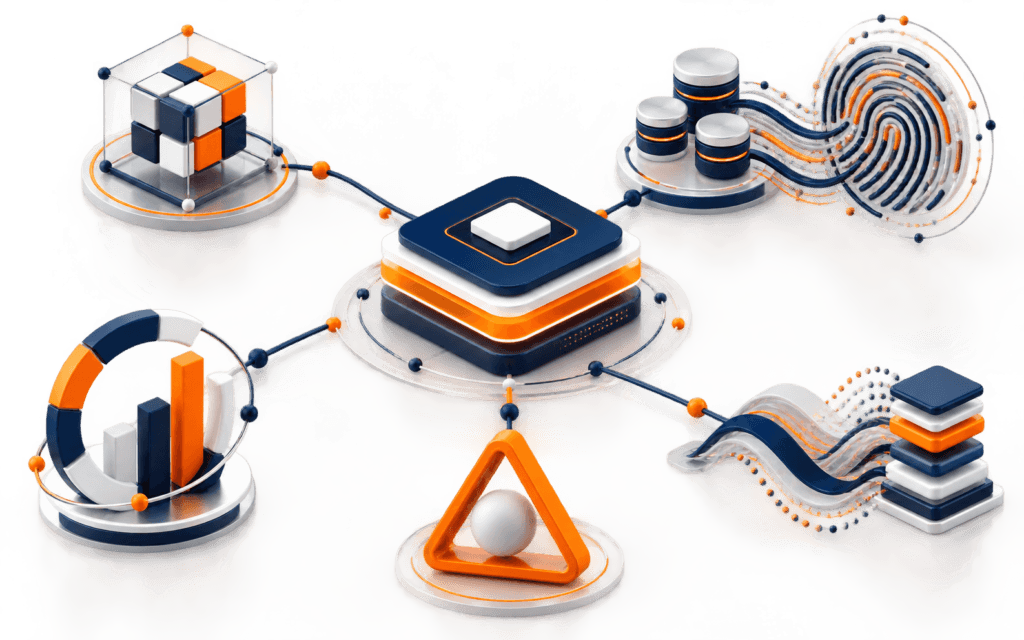
Map scenarios against dimensions that matter: input length, missing fields, language, formatting, ambiguity, hostile instructions, unsupported request, and expected action. Count cases in each intersection. This reveals clusters of easy examples and empty high-risk areas.
Coverage is relative to the documented scenario space, not the real world. A balanced classroom set does not prove population representativeness. State which users, languages, devices, domains, and unusual conditions remain absent.
Separate Development And Holdout Cases
Use one group for prompt and workflow changes and a separate holdout group for later comparison. Keep holdout answers away from routine tuning. Otherwise, improvements may reflect memorization of visible examples rather than a more reliable method.
Version the split and prevent accidental movement of favorable cases after results appear. If a holdout case reveals a new requirement, document the change and create a fresh future holdout rather than pretending the original protocol was unchanged.
Test Privacy Assumptions
Attempt to link combinations of fields back to a real person or organization, inspect rare value combinations, and check whether free text resembles source material. Limit who can access the dataset and logs. Synthetic values can still become sensitive when joined with other information or when a generator reproduces real content.
Do not claim formal privacy from ordinary synthetic generation. NIST notes that mathematically supported differential privacy is distinct from techniques that merely appear synthetic. Use qualified privacy expertise when release or high-risk reuse is contemplated.
Run The Workflow And Capture Errors
Execute every case with fixed model, prompt, tool, and parser versions. Save safe identifiers, expected result, actual result, score, latency or cost when relevant, and error category. Never place credentials or unrestricted model transcripts in a public report.
Use the AI evaluation checklist to connect cases with review. Analyze failures by scenario and consequence, not only one average. A high overall score can hide a complete failure to refuse unsafe requests.
Add Adversarial And Boundary Cases
Include empty input, maximum length, repeated fields, conflicting instructions, malformed structure, unsupported language, encoded content, malicious links, and requests to expose secrets or call unauthorized tools. Define whether the safe result is correction, refusal, or escalation.
Keep adversarial cases harmless. Use dummy secrets, reserved domains, and non-executable payloads. The goal is to test boundaries without creating dangerous artifacts or attacking systems.
Document Provenance And Version
Give the dataset a version, owner, creation date, construction methods, scenario inventory, schema, review status, license or permission, changes, and approved storage location. Hash exported files when integrity matters. Preserve rejected-case counts without preserving unsafe content.
Link every reported result to the exact dataset and workflow version. If labels or cases change, publish a new version and explain why. Otherwise, two evaluation runs with the same name may not be comparable.
Prevent Benchmark Contamination
Keep evaluation cases out of prompts, examples, documentation demonstrations, and training inputs used to tune the workflow. Limit access to holdout labels and record when a reviewer has seen them. If cases are published publicly, treat later results as development evidence rather than a clean holdout comparison.
When a model or service may already have encountered a public benchmark, do not assume independence. Use task-specific private holdouts built from safe requirements and refresh them after repeated tuning. Document the possibility of contamination instead of presenting an inflated score as general capability.
Maintain The Dataset
Assign review dates and triggers: changed input schema, new user route, updated policy, model replacement, repeated production-like failure, or discovered privacy concern. Retire stale cases with a reason, but preserve version history so old evaluations remain interpretable.
Monitor the balance between familiar and newly discovered failure modes. Add a regression case after a verified defect, then check that the fix does not break another scenario. Maintenance should improve coverage without turning every anecdote into an unreviewed label.
Report Limits And Next Steps
State that the set is synthetic, which scenarios it covers, how expectations were reviewed, and which realities are missing. Do not claim production readiness, demographic fairness, or privacy certification from a classroom dataset. Identify the approvals and controlled validation required before any real deployment.
An Artificial Intelligence course can provide guided practice with data and evaluation. The strongest project evidence is the scenario design, review trail, coverage analysis, failure handling, and honest limitations, not the number of generated rows.
Students considering technology training in Gujrat, Punjab, Pakistan can use the practical approach in this article to judge the practical depth of the Artificial Intelligence (AI). The useful evidence is the work a learner can explain, test, and improve, not a list of tools alone.
FAQ
Is synthetic data automatically anonymous?
No. It can reproduce real details or permit linkage through rare combinations. Use fictional sources, privacy review, access controls, and context-appropriate expertise.
How many synthetic test cases are enough?
Start from scenario and risk coverage, then add cases where failures or uncertainty remain. A small purposeful set is stronger than many repeated easy examples.
Can synthetic test data replace real-world validation?
No. It supports early development and bounded evaluation, but it cannot prove performance, fairness, or safety across real users and conditions.
Want to Build Practical Technology Skills?
Explore RisingEdge courses designed to help students learn real skills, build projects, and prepare for career opportunities.