Password Reset Security QA: Identity, Tokens, Expiry, Sessions, Abuse
Password reset security QA verifies the entire recovery state machine, not only whether an email arrives. The gate covers anonymous account lookup, response behavior, message.


Password reset security QA verifies the entire recovery state machine, not only whether an email arrives. The gate covers anonymous account lookup, response behavior, message delivery, token creation and storage, expiry, one-time use, password replacement, session handling, notification, monitoring, and support recovery. A defect at any transition can transfer an account to the wrong person.
Use dedicated test accounts and controlled mailboxes in a nonproduction environment. Never put real reset links, credentials, personal addresses, session cookies, or production tokens in screenshots, logs, tickets, or shared fixtures. Record outcomes and safe identifiers rather than reusable secrets.
Map The Reset State Machine
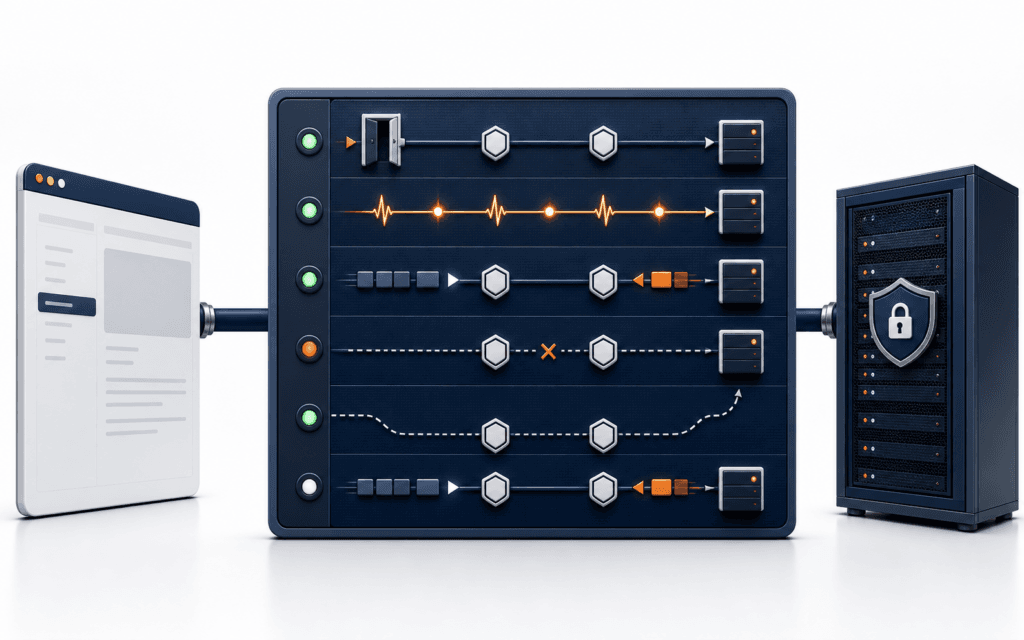
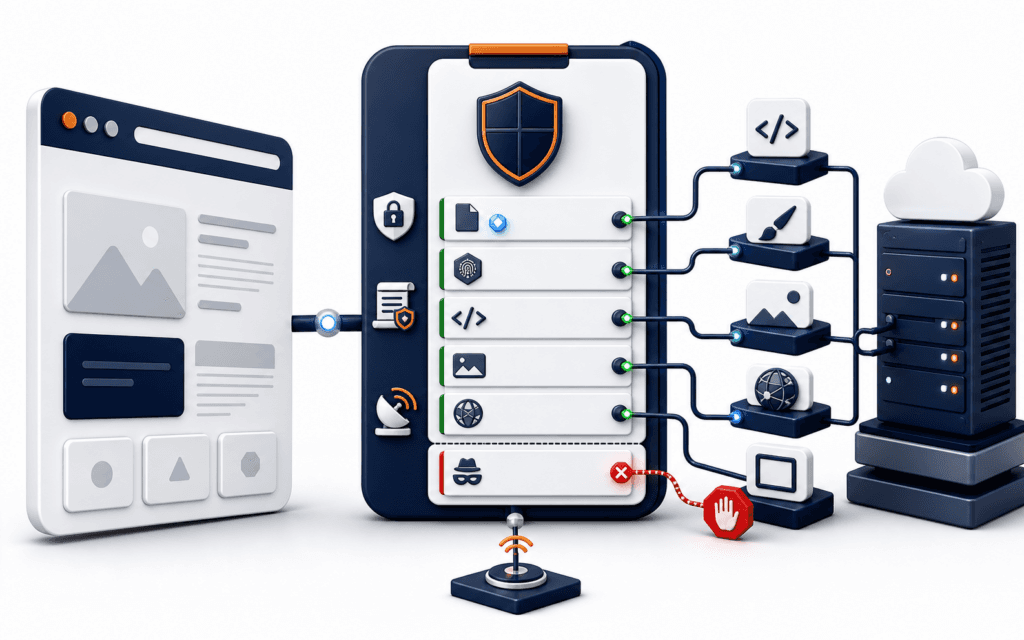
Draw every state from an anonymous reset request to a completed credential change. Include the browser, API, identity store, queue, email or SMS provider, token record, password service, session store, audit pipeline, and support path. Mark where identity is claimed, where possession is demonstrated, and where authority actually changes.
Define allowed transitions and failure outcomes. A request should not alter the account before a valid recovery factor is presented. A token validation failure must not create a restricted session, and a password write failure must not consume the only valid token unless the operation can be retried safely.
Keep Account Discovery Uniform
Submit known, unknown, disabled, locked, federated, and malformed identifiers through both the browser and direct API. OWASP recommends a consistent message for existing and nonexistent accounts and response timing that does not reveal which lookup path occurred. Compare status, body, headers, redirects, cookies, timing distributions, and downstream side effects.
Do not promise perfectly identical network timing from one sample. Run repeated measurements under controlled conditions and investigate meaningful separation. Keep user-facing language neutral, such as saying that instructions will be sent when the account is eligible, while preserving detailed reasons only in access-controlled operational evidence.
Control Request Abuse
Rate-limit by a considered combination of account, network, device, and risk signal rather than one global counter. Test bursts, distributed requests, identifier rotation, IPv6 changes, proxy headers, and parallel calls. The control should slow abuse without permanently locking a victim out because another person submitted their address repeatedly.
Verify queue and provider limits as well as API limits. Duplicate requests can flood an inbox even when every token is cryptographically strong. Decide whether a new request invalidates older tokens, reuses a pending transaction, or issues another valid token, then test that policy explicitly.
Build Trusted Reset URLs
Generate reset links from a configured HTTPS origin or a strict allowlist. OWASP warns against relying on an untrusted Host header because it can produce a link on an attacker-controlled domain. Test altered Host, Forwarded, X-Forwarded-Host, scheme, port, locale, tenant, and path-prefix values at every proxy boundary.
The destination should be a fixed reset route carrying only the opaque recovery value and necessary nonsecret state. Reject open redirects before and after completion. Confirm development and preview domains cannot appear in production messages, and make environment-specific configuration fail closed when the approved origin is missing.
Generate And Store Tokens Safely
Use a cryptographically secure random generator with enough entropy for the token lifetime and attack surface. Bind a server-side record to the account and store a protected representation when practical, so a database read does not immediately expose active links. Never derive tokens from email addresses, timestamps, sequential IDs, or predictable application state.
Inspect logs, traces, analytics, error reporting, queue payloads, database replicas, and support tools for accidental token capture. Limit access to the recovery table and retain only fields needed for validation, expiry, use state, issuance context, and investigation. Token secrecy must survive ordinary observability.
Bind Tokens To One Purpose
A password reset token should authorize only the intended account, tenant, action, and recovery transaction. It must not double as an email-verification token, API credential, login link, or general session. Test token substitution between users, tenants, environments, routes, and recovery purposes.
If the token establishes a limited server-side session, restrict that session to choosing a new password and completing narrowly defined recovery steps. Give it a short lifetime, separate cookie scope, and no access to profile data, billing, exports, or ordinary authenticated APIs.
Enforce Expiry And Single Use
Test just before, exactly at, and just after expiry using a controlled clock where possible. Confirm server time is authoritative and time-zone rendering does not affect validation. An expired token should fail consistently even if its page was loaded earlier or the request crosses multiple application instances.
Submit the same valid token concurrently from several clients. Exactly one password change should commit. Later attempts, browser back navigation, duplicated form submissions, and replayed API requests must fail without changing the new credential. Verify old tokens according to the documented policy after a newer reset is requested.
Protect Delivery Channels
Send recovery instructions only through verified channels associated with the account. Do not reveal a destination more precisely than the product’s privacy policy permits. Test provider bounce, delay, duplicate delivery, reordered messages, template rendering, localization, and link wrapping by security gateways.
Email and SMS are delivery mechanisms, not proof that the original requester owns the account. Evaluate the assurance needed for high-impact accounts and provide a controlled support path when the channel is unavailable. Never send the new password itself.
Harden The Reset Page
Serve the reset form only over HTTPS with deliberate Content Security Policy, framing protection, cache behavior, and Referrer-Policy. OWASP recommends preventing reset tokens from leaking through referrers. Avoid third-party scripts, images, chat widgets, and analytics on a page whose URL may carry an active secret.
Do not expose token validity before the user submits the next required step when that distinction creates an oracle. Remove the token from the address bar through a controlled exchange when the architecture supports it, and ensure browser history, server logs, and client telemetry do not retain it.
Validate The New Password
Apply the same current password policy used by normal password changes. Check length, allowed characters, compromised-password controls, confirmation, and accessible error handling without silently truncating input. NIST guidance should inform the policy, while the application must implement and test its chosen requirements consistently.
Reject malformed bodies, duplicate fields, unexpected encodings, missing confirmation, oversized inputs, and parameter pollution through the API as well as the form. The broader API input validation workflow helps test schema and limit behavior at this boundary.
Commit Changes Atomically
The password hash update, token consumption, security event, and required session action should form one reliable transaction or coordinated workflow. Test database timeout, deadlock, queue failure, process termination, and retry. Avoid states where the password changed but the token remains valid, or the token was consumed before a failed password write.
Use idempotency or conflict handling so a client retry cannot apply a stale password after a later successful change. Return a stable outcome without revealing internal transaction details. Verify replicas and caches cannot authenticate the old credential beyond the system’s documented consistency window.
Handle Existing Sessions
Choose and document whether a successful reset invalidates all existing sessions automatically or asks the user to choose, as OWASP discusses. For higher-risk products, automatic invalidation is often the safer policy. Test browser sessions, mobile refresh tokens, remembered devices, API keys, federated sessions, and background jobs separately.
A password table update alone may not revoke distributed sessions. Exercise the actual revocation mechanism and verify protected requests fail after the expected propagation window. Use the session management QA checklist to cover cookie rotation, expiry, revocation, and logout evidence.
Notify Without Leaking Secrets
Send a post-change notification to the verified channel with the time, relevant account context, and a safe route to report an unauthorized reset. Do not include the password, active token, full session list, sensitive profile data, or a one-click action that creates another unsecured recovery path.
Test notification failure independently from the password transaction. A provider outage should alert operations and follow a documented retry policy, but should not roll the account back to the old credential. Prevent repeated client retries from generating a flood of success notifications.
Test Races And Replays
Run parallel reset requests, link opens, password submissions, and login attempts. Include two tokens issued close together, a token used while another request is created, and an old password login racing with completion. Document the winning transition and require every losing transition to fail safely.
Also test browser refresh, back-forward cache, copied links, message scanners that prefetch URLs, mobile deep links, and security products that rewrite links. A GET request should not consume the token or change the account merely because an automated scanner visited it.
Log Security Evidence
Record request and completion events with a safe correlation ID, account identifier protected according to policy, time, channel category, outcome category, rate-limit decision, token record identifier, session action, and service versions. Never log the raw token, password, session cookie, or full message body.
Alert on high request volume, many accounts from one source, one account targeted from many sources, token brute force, repeated expired-token use, provider failures, unusual completion geography, and session revocation errors. Define retention and access before enabling verbose security logs.
Prepare Support Recovery
Document how support handles a lost delivery channel, compromised mailbox, inaccessible MFA, and disputed reset. Require evidence appropriate to account risk, separation of duties for sensitive overrides, time-bounded recovery grants, and an auditable decision. Security questions alone are generally weak and should not become an easy bypass.
Test support tooling with least-privilege roles and synthetic accounts. Staff must not see passwords or active reset tokens, and they should not be able to silently transfer an account without recorded authorization. Include escalation and reversal procedures for suspected social engineering.
Run The Release Matrix
Create a matrix covering account classes, request behavior, delivery, token properties, expiry boundaries, replay, concurrency, password policy, session outcomes, notification, logging, support, and dependency failures. Save expected and observed results with timestamps and build identifiers.
Block release for account enumeration, predictable or exposed tokens, hostile reset origins, replay, non-atomic credential changes, uncontrolled message abuse, old-session survival contrary to policy, secret leakage, or unaudited support bypass. The Full Stack Web Development course can strengthen the implementation and testing skills behind this gate.
In Gujrat, Punjab, Pakistan, prospective learners can apply this checklist when discussing the Full Stack Web Development with an admissions adviser. Questions should stay tied to current exercises, review methods, prerequisites, and project evidence.
FAQ
Should a password reset automatically log the user in?
Usually no. OWASP recommends returning the user to the normal login flow because automatic login adds session complexity.
Should a new reset request invalidate older tokens?
Choose and document one policy, then enforce it atomically and test concurrent requests and delayed messages.
What is the most important reset-token property?
It must combine strong unpredictability, secure handling, short expiry, one-purpose binding, and reliable single use.
Want to Build Practical Technology Skills?
Explore RisingEdge courses designed to help students learn real skills, build projects, and prepare for career opportunities.