How To Choose An IT Course: Goals, Projects, Career Fit
To choose an IT course, start with the type of work you want to practice, the time you can commit every week, and the project evidence you want to produce. Then compare course.


To choose an IT course, start with the type of work you want to practice, the time you can commit every week, and the project evidence you want to produce. Then compare course curriculum, prerequisites, teaching format, assignments, support, assessment, tools, schedule, and next steps. Do not choose only from a popular title or an income claim.
A useful decision connects three things: personal fit, course quality, and realistic follow-through. Personal fit covers interests and working style. Course quality covers what is taught and how it is practiced. Follow-through covers attendance, independent practice, project completion, and the next learning or career step.
Write A Specific Goal
Replace “I want to learn IT” with a goal that can guide a course choice. Examples include building business websites, designing brand and social content, managing search campaigns, creating full-stack applications, automating repeated work, or understanding AI systems.
State the result and the timeframe without promising an outcome outside your control. A useful goal might be: “Within six months, I want to build and present two responsive websites and understand how to maintain them.”
If you have several interests, rank them. Choose one primary skill path for the next course and keep the others as later options. Trying to begin development, design, marketing, and AI at the same depth can reduce practice in all four.
Assess Interests And Work Preferences
Ask what activities hold your attention: solving logic problems, arranging visual information, writing and analyzing messages, configuring systems, working with data, or improving repeated processes. The answer does not lock your career, but it helps select a starting environment.
The UK National Careers Service describes skills assessment as a way to understand motivation, identify careers that do not interest you, and compare suggestions. Use any assessment as a conversation prompt, not a final verdict about what you can become.
Notice whether you prefer long focused building sessions, frequent client feedback, visual iteration, numerical analysis, or operational troubleshooting. Different technology paths use overlapping skills but place different weight on daily tasks.
Compare The Work Behind Course Titles
Course titles can hide very different work. Web developers create and maintain websites, while digital interface designers focus on layout, functionality, navigation, and usability. Graphic designers communicate ideas through visual concepts and layouts. Marketing work combines audience, content, channels, measurement, and iteration.
Read the module list and turn each module into an activity. “JavaScript” may mean writing and debugging code. “Typography” means evaluating type choices and hierarchy. “SEO analytics” means inspecting queries, pages, and user behavior before recommending changes.
Choose the activities you are willing to practice repeatedly. Interest in the final product is useful, but progress depends on tolerating the debugging, revision, research, and feedback required to produce it.
Check Prerequisites Honestly
Ask what a learner should know before the first class: basic computer use, file management, typing, English terminology, mathematics, design fundamentals, HTML, or previous programming. Confirm which skills are taught from the beginning.
A beginner course should not require hidden experience. An advanced course should not spend most of its time repeating basics. Request a module outline and ask where practical work begins.
If a prerequisite is missing, build a short preparation plan instead of avoiding the path. Two weeks of file management, browser tools, typing, or basic HTML may make the main course far more productive.
Calculate Real Weekly Study Time
Count class time, travel, revision, assignments, and project work. A two-hour class can require several additional hours of independent practice. Use the time you can maintain during a normal week, not an ideal week with no work or family responsibilities.
Decide when practice will happen and where. A fixed schedule, usable computer, reliable internet, and organized workspace matter more than vague intention.
Ask how missed sessions, deadlines, recordings, lab access, and instructor support are handled. A course can be well designed but still be a poor fit if its schedule prevents consistent participation.
Demand Practical Project Evidence
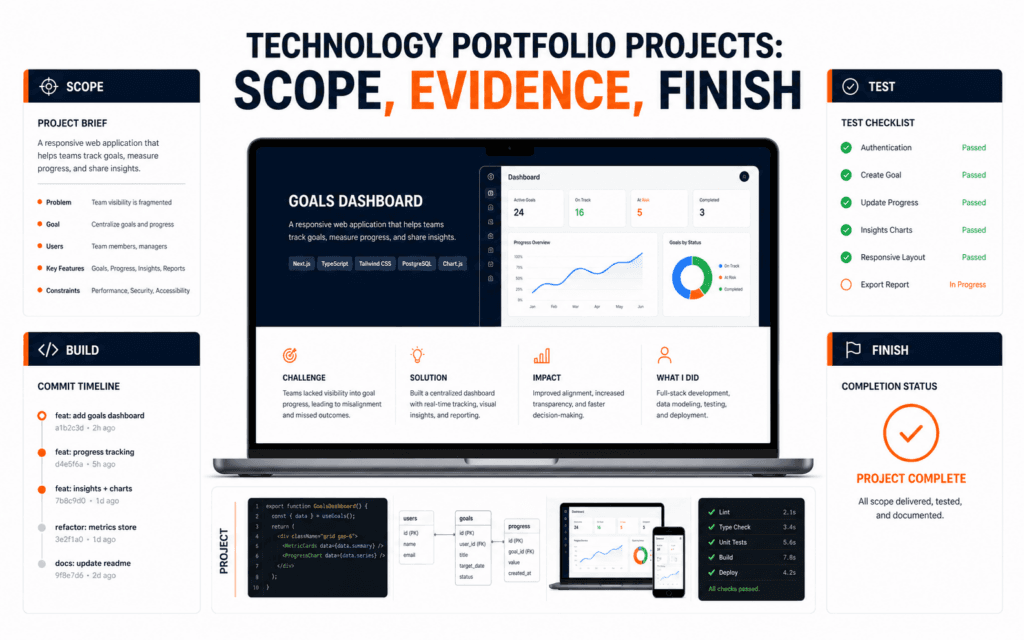
A strong course should explain what learners build, how projects increase in difficulty, what feedback is provided, and what counts as complete. Projects should require decisions, revision, testing, and presentation instead of only copying an instructor.
Ask to see the expected project format. Development work may include repositories, live demos, documentation, and tests. Design work may include briefs, drafts, systems, and final applications. Marketing work may include plans, content, tracking, reports, and recommendations.
The project should create evidence you can discuss honestly. It should not use fabricated client results, copied case studies, or templates presented as fully original work.
Evaluate Teaching And Feedback
Find out whether sessions combine explanation, demonstration, guided practice, independent work, review, and correction. Watching a tool is not the same as using it under realistic constraints.
Ask who reviews assignments, how often feedback is given, and whether learners can ask follow-up questions. Useful feedback identifies the problem, explains why it matters, and gives a direction for revision.
Class size, lab support, language, pace, and instructor availability affect the learning experience. Compare these details directly rather than relying only on promotional language.
Compare Web Development Paths
Choose full-stack development when you want to practice interfaces, application logic, data, APIs, testing, and deployment as one connected system. Expect regular coding, debugging, and independent problem solving.
The Full Stack Web Development course is the relevant Rising Edge path to inspect for curriculum, projects, schedule, and admissions details. Compare the listed modules with the applications you want to build.
Choose web design when your main interest is page structure, responsive layout, typography, visual systems, usability, and translating requirements into interfaces. The Web Design course gives a separate path to compare.
Compare WordPress And E-Commerce Paths
WordPress development can fit learners who want to build and maintain content-managed websites, work with themes and plugins, configure forms and SEO, and support editors or business owners. It still requires careful technical reasoning even when less code is used.
Review the WordPress Development course if that work matches your goal. Ask how the course covers hosting, security, backups, performance, custom content, and release testing.
Shopify development is more specific to e-commerce stores, products, collections, themes, apps, checkout constraints, and store operations. Compare it when your target projects involve online retail rather than general content sites.
Compare Design And Marketing Paths
Graphic design fits learners who want to communicate through layout, typography, color, imagery, and visual systems. The work requires concept development, critique, revision, file organization, and careful exports, not only software shortcuts.
Inspect the Graphic Design course and ask which portfolio pieces are completed. Compare that with digital marketing if you prefer audience research, content planning, channels, search, campaigns, analytics, and performance decisions.
The Digital Marketing course is a relevant course page to review. Ask which platforms are used, but judge the course mainly by transferable planning, measurement, and analysis skills because tools change.
Compare SEO And AI Paths
SEO fits learners who enjoy research, website analysis, content structure, technical checks, internal linking, reporting, and patient iteration. It combines communication with evidence and should avoid guaranteed ranking claims.
AI courses vary widely. A foundational Artificial Intelligence course should be compared with narrower paths such as AI content generation, prompt engineering, or automation. Ask whether the course explains evaluation, data handling, limitations, and human review.
Choose AI because you want to understand and build useful systems, not because a tool appears fashionable. A good project should define the problem, inputs, workflow, evaluation, risks, and responsible use.
Use A Course Comparison Matrix
Create rows for goal fit, prerequisites, weekly time, curriculum depth, practical assignments, final projects, instructor feedback, class format, tools, fees, schedule, support, and next steps. Score each course from one to five and add evidence beside every score.
Do not let one strong category hide several weak ones. A convenient schedule cannot compensate for no practical work, and an impressive curriculum cannot help if prerequisites or time demands make completion unlikely.
Separate confirmed facts from questions. Course pages can provide published details, while admissions staff can clarify schedule, class format, current fees, and entry requirements.
Ask Better Questions Before Enrolling
Ask: What will I be able to build by the end? Which projects are required? How are assignments reviewed? What background is expected? How much practice is needed outside class? Which tools or accounts cost extra? What happens if I miss a session?
Also ask who owns project files, whether public portfolio use is allowed, how group work is credited, and whether certificates depend on attendance, assessment, or project completion.
Contact the institute when a decision depends on current details. Rising Edge provides a contact page for direct questions rather than relying on assumptions or outdated third-party information.
Avoid Weak Decision Signals
Do not choose only because a friend selected the course, a tool is trending, or an advertisement promises fast income. Career outcomes depend on many factors including practice, portfolio quality, communication, local opportunity, prior experience, and continued learning.
Do not treat the longest curriculum as automatically best. A focused course with coherent projects and feedback may produce stronger learning than a broad list of tools covered too quickly.
Be cautious with guaranteed jobs, guaranteed clients, guaranteed rankings, or guaranteed earnings. Ask for the exact service or evidence behind any claim and keep your own expectations realistic.
Make A Thirty-Day Commitment Test
Before enrolling, spend several sessions on a small beginner activity from the field. Build one responsive page, create a small identity system, analyze a sample search report, write a basic program, or map an automation workflow.
The purpose is not to master the field. It is to observe whether you can stay engaged through confusion, correction, and repetition. Record what you enjoyed, what frustrated you, and what support would help.
Use that evidence to update the comparison matrix. A short trial can reveal more than hours of watching promotional videos.
Choose And Define The Next Step
Select the course that best matches your primary goal, available time, prerequisite level, project expectations, and preferred work. Write why it won and what you will do each week to complete it.
Define the first portfolio outcome before the course starts. This gives assignments a direction and makes it easier to save drafts, feedback, revisions, and final evidence.
Review Rising Edge admissions for the current enrollment process and use the official course pages to compare available paths. Confirm time-sensitive details directly before making a payment or schedule commitment.
Students considering technology training in Gujrat, Punjab, Pakistan can use this comparison framework to judge the practical depth of the Full Stack Web Development. The useful evidence is the work a learner can explain, test, and improve, not a list of tools alone.
FAQ
Which IT course is best for a complete beginner?
The best starting course matches the work you want to practice and teaches its prerequisites clearly. Compare curriculum, weekly time, projects, feedback, and support instead of choosing one universal beginner title.
Should I choose coding, design, marketing, or AI?
Choose coding for building and debugging systems, design for visual communication and interfaces, marketing for audiences and measurable campaigns, and AI for data-driven or automated workflows. Try a small activity in each uncertain area before deciding.
What should I verify before paying for an IT course?
Verify the current curriculum, prerequisites, schedule, total fees, required tools, teaching format, assignments, final projects, feedback process, attendance rules, certificate requirements, and refund or transfer terms.
Want to Build Practical Technology Skills?
Explore RisingEdge courses designed to help students learn real skills, build projects, and prepare for career opportunities.