Dataset Labeling Checklist: Rules, Review, Edge Cases
A dataset labeling checklist helps beginners prepare training examples with less confusion and fewer hidden mistakes. The practical workflow is to define the prediction task, write.

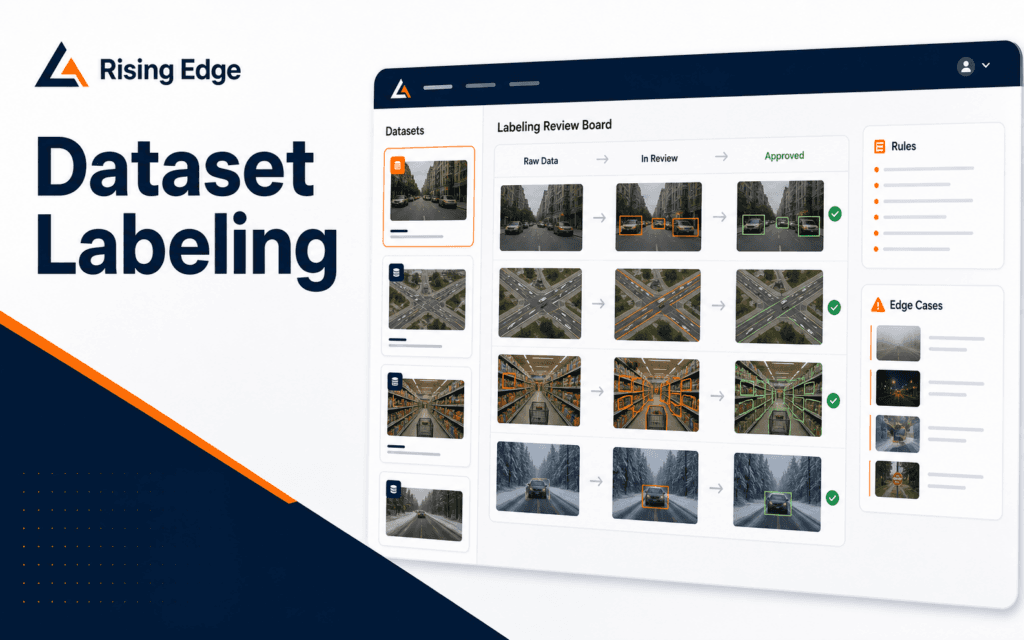
A dataset labeling checklist helps beginners prepare training examples with less confusion and fewer hidden mistakes. The practical workflow is to define the prediction task, write label rules, collect realistic examples, label edge cases consistently, review disagreements, document changes, and keep private or sensitive data out of unsafe workflows. Use this checklist to diagnose and resolve the problem when an AI project has examples but the labels are too inconsistent for useful learning.
Google Cloud describes data labeling as assigning labels to raw data so it has context for machine learning and deep learning. That simple idea carries a lot of responsibility. If labels are unclear, the model learns from unclear answers.
Define The Prediction Task
Start by writing the task in one plain sentence. The system may classify support messages, detect product categories, identify names in text, tag images, or decide whether a course enquiry needs follow-up. The label should match that task.
Google’s Rules of Machine Learning defines a label as an answer for a prediction task, either produced by a system or supplied as the right answer for training data. For beginners, that means the label is not decoration. It is the answer the model is expected to learn from.
Avoid collecting labels before defining the task. A message can be labeled by urgency, topic, sentiment, course interest, language, or next action. Those are different tasks. Mixing them creates confusion.
The Artificial Intelligence course connects to this habit because students need to understand data decisions before they can judge model behavior.
Write Label Rules
Label rules explain what each label means and when to use it. A category name alone is rarely enough. If a label is Course enquiry, write what counts as a course enquiry, what does not count, and what to do when the message mentions multiple courses.
Rules should include positive examples, negative examples, and boundary examples. Positive examples show clear use. Negative examples show what belongs elsewhere. Boundary examples show difficult cases that annotators may interpret differently.
Keep label names stable. If one file uses admissions lead and another uses student enquiry for the same idea, review becomes harder. Stable naming reduces accidental duplicates.
Rules should also describe uncertainty. Some data should be marked needs review rather than forced into a category. Forced labels can pollute training data when the correct answer is not clear.
Collect Realistic Examples
Useful datasets include normal cases and messy cases. Real messages may contain spelling errors, short phrases, mixed intent, missing details, repeated words, or irrelevant text. If the dataset contains only polished examples, it may not represent real use.
Handle sensitive data deliberately. Remove private details that are not needed for the task. If a student name, phone number, email address, or payment detail is irrelevant, it should not appear in training examples used for practice.
Balance matters. If one label has hundreds of examples and another has five, the training process may learn the common category more easily. Beginners should at least notice imbalance and document it.
Google’s machine learning data preparation guidance emphasizes preparing data so models can learn useful patterns. Labeling is part of that preparation because labels tell the system what pattern matters.
Handle Edge Cases
Edge cases are examples that sit near the boundary between labels. A message that says I want AI and web development may belong to multiple course interests. A message that says call me may be an enquiry, but it may lack enough context. A complaint about a course may need support, not admissions.
Create a small edge-case section in the labeling guide. Add decisions as the team discovers them. This prevents every annotator from solving the same problem differently.
When edge cases repeat, the label set may need revision. Sometimes the right fix is a new label. Sometimes the right fix is a clearer rule. Sometimes the right fix is to split the task into two tasks.
Keep edge cases visible instead of hiding them to make the dataset look clean. Real AI work becomes more reliable when difficult examples are visible and documented.
Review Label Quality
A second review pass catches many problems. Review a sample of labeled data and look for inconsistent labels, unclear rules, duplicate examples, missing context, and private information that should be removed.
If several people label the same examples differently, do not blame the people first. Check the instructions. Disagreement often means the rules are unclear.
Use a change log. Record the date, rule change, reason, affected labels, and examples that need relabeling. This helps the dataset stay understandable as the project improves.
The AI Content Generation course is relevant when students use labeled examples to guide drafts, reviews, or classification workflows. The same discipline applies: examples need clear meaning.
Prepare A Handoff
A dataset handoff should include the task statement, label list, label definitions, examples, edge-case rules, review status, privacy notes, file format, and known limitations. Do not hand off a folder of files with no explanation.
Include source context where appropriate. If labels came from customer messages, internal notes, product records, or student enquiries, say so at a high level without exposing private details.
Also explain what the dataset should not be used for. A small practice dataset should not be treated as proof that a production model is accurate. A dataset built for one course category task should not automatically be reused for sentiment or admissions priority.
The Prompt Engineering course can support this because examples and labels often become part of prompt tests, evaluation rubrics, or structured output checks.
Split Training, Review, And Test Examples
Separate examples by purpose. A beginner project can still use training, review, and test groups. Training examples help build or tune the system. Review examples help improve the rules. Test examples help check whether the final workflow behaves well on examples it has not already seen.
This split does not need to be complicated for a class project. The important idea is to protect some examples from constant editing. If every difficult example is used to rewrite the rules repeatedly, the team may only learn how to handle those examples instead of improving the general workflow.
Keep the test group realistic. Include ordinary examples and edge cases. Record why each example belongs in the test group. When a workflow improves, rerun the same test group so the comparison is fair.
Track Label Drift
Label drift happens when the meaning of a label slowly changes. At the start, support request may mean a customer needs help with an order. Later, someone may use the same label for refund questions, product complaints, account issues, and course questions. The label becomes too broad.
Review labels after new examples arrive. If a label starts covering too many different situations, split it or rewrite the rule. If two labels keep receiving the same examples, merge them or clarify the difference.
Label drift is especially easy in teams because people learn from each other informally. A written guide protects consistency and helps new reviewers understand old decisions.
Sample Before Scaling
Before labeling hundreds of examples, label a small sample and review it carefully. Ten to twenty examples can reveal missing labels, confusing rules, privacy issues, or edge cases that the team did not expect.
Sampling also protects time. It is easier to rewrite rules after twenty examples than after five hundred. If the sample shows repeated disagreement, pause and fix the guide before scaling.
After the first sample, create a short review note. List labels that were clear, labels that caused confusion, examples that need discussion, and rules that changed. This note becomes part of the dataset history.
For learners, this is one of the fastest ways to build judgment. The goal is not to label more data as quickly as possible. The goal is to make the labels useful enough for the AI task.
This sample step also gives teachers or reviewers a clean checkpoint before larger work begins.
Final Dataset Labeling Checklist
Before using labeled data, confirm task definition, label names, label rules, examples, edge cases, review process, disagreement handling, privacy review, file format, change log, and handoff notes. The checklist is small, but it prevents a noisy dataset from becoming a bigger model problem.
Common Dataset Labeling Mistakes
The first mistake is labeling before the task is clear. The second is using labels with no written definitions. The third is ignoring edge cases. The fourth is keeping sensitive data that is not needed. The fifth is changing rules without relabeling affected examples.
When reviewers disagree, do not average the labels silently. Record the disputed case, identify which rule was interpreted differently, update the guidance if needed, and then relabel comparable examples consistently.
This topic also has a local training use for students in Gujrat, Punjab, Pakistan: this checklist can be compared with practical exercises in the Artificial Intelligence (AI). Confirm current batch requirements directly and judge the learning path by inspectable work.
FAQ
What is dataset labeling?
Dataset labeling is assigning useful labels to raw data so the data can support a machine learning task.
Why do label rules matter?
Rules make labels consistent across people, files, and review cycles. Without rules, similar examples may receive different answers.
Should edge cases be removed?
No. Edge cases should be documented and reviewed. They often reveal where the task or label rules need improvement.
Want to Build Practical Technology Skills?
Explore RisingEdge courses designed to help students learn real skills, build projects, and prepare for career opportunities.