AI Voiceover Production QA: Rights, Pronunciation, Audio.
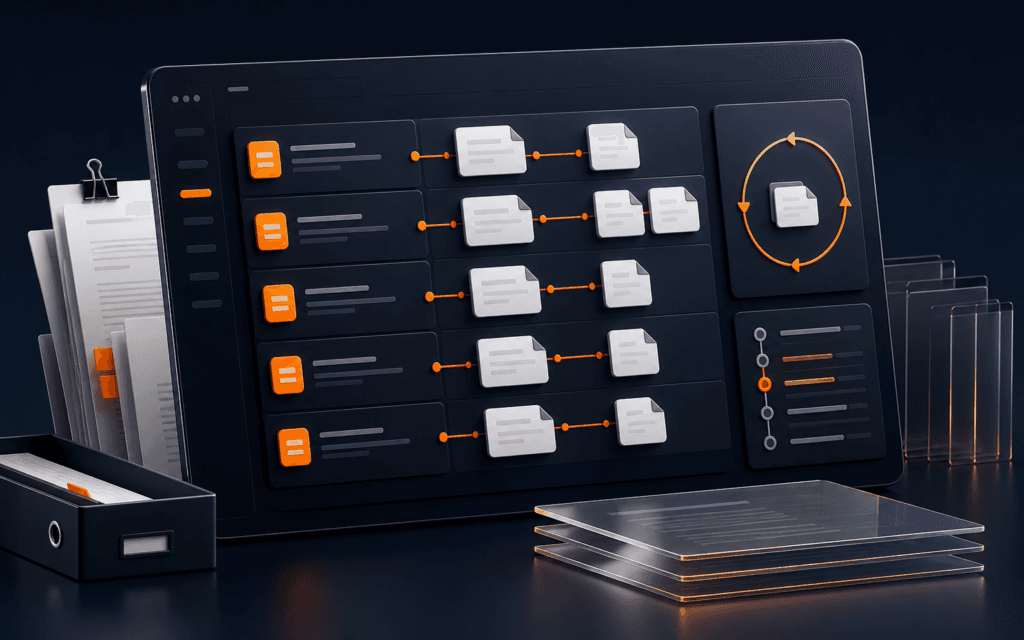
AI voiceover production QA is a release gate that compares an approved script, authorized voice, generated audio, accessibility package, and public delivery context. It catches.

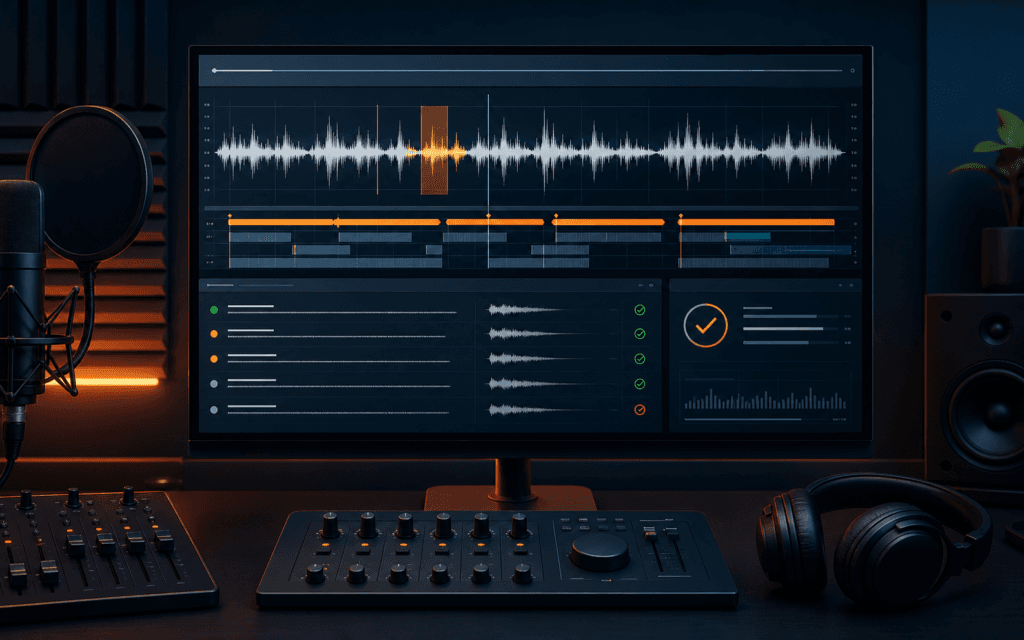
AI voiceover production QA is a release gate that compares an approved script, authorized voice, generated audio, accessibility package, and public delivery context. It catches problems that fluent synthetic speech can hide: missing consent, accidental imitation, changed facts, incorrect names, distracting pacing, clipped words, poor loudness, and captions that no longer match the final edit. The result is not simply an audio file that sounds pleasant. It is a traceable production asset that an accountable reviewer can approve for a defined use.
Use fabricated or public material while learning. Keep credentials, client drafts, learner records, contracts, and unreleased announcements out of model prompts and general logs. Never clone or imitate an identifiable person without documented authorization for the exact voice, project, channels, territory, and duration. Laws and platform rules vary, so route uncertain rights questions to qualified legal or policy review rather than treating a technical setting as permission.
Define The Release Context
Record where the voiceover will appear, who will hear it, the language and locale, target duration, publication date, distribution channels, and the person who can approve release. A training narration, paid advertisement, public-service message, and fictional character voice carry different factual, accessibility, and rights risks.
Write explicit stop conditions before generation. Missing rights evidence, an unverifiable claim, undisclosed imitation, a material script mismatch, inaccessible media, or a corrupted export should block release. Cosmetic preferences can return to editing without weakening the gate.
Freeze The Approved Script
Give the script a version identifier and hash before synthesis. Mark headings, speaker directions, pauses, emphasis, abbreviations, numbers, dates, currencies, URLs, names, and quoted material. Separate words to be spoken from production notes so the model does not narrate instructions.
Resolve factual claims through the same source process used for written content. A source-backed AI content brief is useful because the voice track is harder to scan and correct after publication than a paragraph on a page.
Establish Voice Authorization
Identify whether the voice is a provider-supplied synthetic voice, a commissioned performer, an employee recording, or a custom voice derived from samples. Preserve the authorization source, permitted uses, owner, expiry, and revocation path with restricted access.
The U.S. Copyright Office describes digital replicas broadly enough to include realistic, digitally created audio depictions of individuals. Do not assume that possession of a sample grants permission to synthesize or distribute a voice. Escalate ambiguous likeness, contract, publicity, or jurisdiction questions.
Plan Transparent Disclosure
Decide how listeners will learn that the voice is AI-generated when disclosure is required by provider rules, law, client policy, or the risk of confusion. Place the notice where a listener can encounter it, not only in inaccessible metadata.
Use plain language and avoid claims that a real person spoke, endorsed, reviewed, or personally experienced something when that is not true. Disclosure does not cure unauthorized imitation, deception, or inaccurate content; it is one control in a larger approval process.
Build A Pronunciation Ledger
Create a small table for names, organizations, products, technical terms, acronyms, units, and local place names. Include the written form, spoken form, stress note, language, evidence source, and reviewer. Ask an authorized subject-matter speaker when public dictionaries do not resolve the pronunciation.
Test sensitive terms in short samples before rendering the whole script. Keep phonetic helpers outside captions and transcripts unless they are genuinely part of the spoken meaning. A workaround that improves synthesis must not silently change public text.
Choose Voice And Delivery Deliberately
Select a voice for clarity, audience fit, language coverage, and authorized use rather than novelty. Test a representative paragraph containing numbers, questions, acronyms, and names. Evaluate intelligibility on ordinary phone and laptop speakers, not only studio headphones.
Document model, voice identifier, supported instructions, speed, format, and generation time. OpenAI’s current Audio API accepts text, voice, optional instructions on supported models, and several output formats. Treat these capabilities as implementation options, not quality guarantees.
Generate In Controlled Segments
Divide long scripts at logical paragraph or scene boundaries while keeping enough context for consistent tone. Name segments by script version and sequence. Do not split inside a sentence, quoted passage, number, or pronunciation-sensitive phrase.
Render one approved configuration before experimenting. Excessive uncontrolled variations make review expensive and obscure which prompt produced the final asset. Retain only the inputs and outputs needed by the project’s evidence and retention policy.
Run A Script-Fidelity Pass
Compare the final audio against the frozen script from beginning to end. Check every sentence, name, number, negation, date, qualifier, call to action, disclaimer, and URL. Mark the exact timecode for omissions, substitutions, repetitions, hallucinated words, and truncated endings.
Do not approve by listening while multitasking. One reviewer should follow the script visually while another pass focuses only on the sound. If the script changes, issue a new version and regenerate affected segments instead of editing the evidence trail in place.
Review Meaning And Emphasis
Listen for emphasis that reverses or distorts meaning, especially words such as not, only, before, after, minimum, and maximum. Check whether pauses separate headings, lists, quotations, warnings, and calls to action clearly.
Synthetic fluency can make an incorrect statement sound authoritative. Ask a subject-matter reviewer to approve terminology and meaning independently from the audio engineer’s technical review. Record unresolved ambiguity rather than assuming listeners will infer the intended reading.
Check Pronunciation In Context
Verify the pronunciation ledger against the complete sentence because stress and pacing can change near punctuation. Check all repeated instances; a model may pronounce the same acronym differently across segments.
Avoid solving a difficult word by replacing it with an inaccurate simpler term. When a pronunciation cannot be stabilized, use an authorized alternate construction, record the decision, and update the script version and transcript together.
Inspect Pacing And Listening Load
Assess whether listeners can follow definitions, steps, numbers, and lists without rereading. Slow dense instructions, insert meaningful pauses, and move supporting detail into accompanying text. Speed controls should not be used to force an oversized script into an arbitrary duration.
Listen to the full track without pausing to experience cumulative fatigue. A voice that is clear for twenty seconds may become tiring over ten minutes because of relentless rhythm, narrow pitch, or insufficient separation between ideas.
Run Technical Audio Checks
Inspect the waveform and listen for clipping, clicks, pops, repeated syllables, abrupt room-tone changes, long silence, excessive noise reduction, stereo imbalance, and segment joins. Confirm the required sample rate, channels, codec, duration, and file integrity for the destination.
Measure loudness and peaks against the publication platform’s documented specification when one exists. Do not invent a universal target. Compare segments for consistency and test the encoded delivery file, because conversion and upload can introduce defects absent from the master.
Test Real Playback Conditions
Play the final encoded asset on a phone speaker, laptop, headphones, and the actual webpage or video player. Test slow networks, seeking, pause and resume, volume controls, and the first and last seconds. Confirm that autoplay behavior respects user control.
Check that background music and effects do not mask speech. Reviewers with different hearing, language, and device contexts can uncover problems that a single producer in a quiet room will miss.
Create The Text Alternative
For prerecorded audio-only content, provide an equivalent transcript that contains the same information and identifies speakers and meaningful sounds where needed. W3C guidance treats this text alternative as a Level A requirement for prerecorded audio-only media.
For synchronized video with meaningful audio, provide accurate captions aligned to the final edit. Captions should include dialogue, speaker changes when unclear, and important non-speech information. Correct automated output manually, especially names, technical terms, punctuation, and timing.
Synchronize Every Deliverable
Hash the final script, audio, transcript, caption file, thumbnail, and publication manifest. Verify that titles, version numbers, speaker labels, duration, language, and disclosure agree across them. A late audio splice can invalidate captions even when both files look complete independently.
Use the approved AI video storyboard workflow when the voiceover accompanies scenes. Confirm that narration timing, on-screen claims, visual evidence, and captions describe the same final sequence.
Review Privacy And Security
Remove hidden metadata, temporary paths, private filenames, embedded comments, and unnecessary personal details before distribution. Store consent records and contracts separately from public media. Never expose provider keys or authorization headers in project files.
If a sample contains a person’s voice, apply the project’s access, retention, deletion, and incident rules. A generated derivative can remain sensitive even when it no longer sounds identical to the source.
Approve With Evidence
The release record should name the script and audio hashes, voice authorization reference, generation configuration, reviewers, completed checks, accepted exceptions, publication destinations, and approval time. The approver should hear the exact encoded file that will be published.
The AI Content Generation course can provide structured practice across briefs, generation, editing, and responsible publishing. Production authority still remains with the organization and named reviewers.
Monitor And Correct
After release, test the public player, transcript, captions, downloads, and disclosure while signed out. Provide a visible route for pronunciation, accessibility, rights, and factual corrections. Preserve the replaced version and correction reason according to policy.
Stop distribution immediately when credible evidence indicates unauthorized voice use, harmful impersonation, a material factual error, exposed private data, or a broken accessibility alternative. Notify the responsible owner and follow the documented takedown and correction process.
A structured Artificial Intelligence (AI) program can help learners place voice generation inside a wider process of scripting, evidence review, rights checks, editing, and release QA. The tool output is only one stage of that workflow.
This topic also has a local training use for students in Gujrat, Punjab, Pakistan: this checklist can be compared with practical exercises in the Artificial Intelligence (AI). Confirm current batch requirements directly and judge the learning path by inspectable work.
FAQ
Does a natural-sounding voiceover pass QA?
No. Natural delivery does not prove script accuracy, voice authorization, technical integrity, accessibility, or appropriate disclosure.
Do audio-only voiceovers need captions?
Prerecorded audio-only content needs an equivalent text alternative such as a transcript. Captions apply to synchronized media with audio; requirements depend on the media context.
Can I clone a public figure’s voice if I disclose AI use?
Do not assume so. Disclosure does not grant authorization or resolve likeness, contract, platform, or jurisdiction-specific obligations.
Want to Build Practical Technology Skills?
Explore RisingEdge courses designed to help students learn real skills, build projects, and prepare for career opportunities.