Freelancer Weekly Client Update: Progress, Evidence, Risks, Decisions
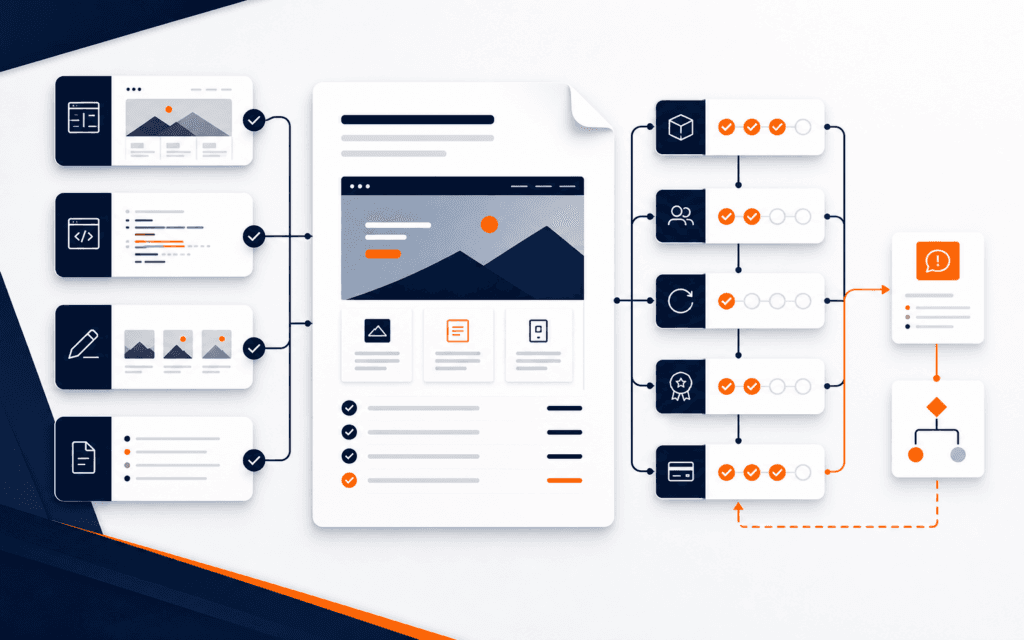
A freelancer weekly client update should let a stakeholder answer six questions quickly: what outcome was completed, what evidence supports it, what is in progress, what happens.


A freelancer weekly client update should let a stakeholder answer six questions quickly: what outcome was completed, what evidence supports it, what is in progress, what happens next, what threatens the plan, and which decision or client action is required. Keep it short enough to scan, but precise enough to become the shared record for scope, ownership, and follow-up.
The update is not a diary of hours or a substitute for the contract, project board, issue tracker, design review, or acceptance record. It points to those systems and translates their current state into decisions. Send it on a predictable schedule, use stable headings, and preserve changes rather than rewriting history in chat.
Restate The Current Outcome
Open with the project, reporting period, current milestone, and one-sentence status. Name the client outcome, not only the task: the registration form now validates approved fields in the staging environment, rather than worked on validation.
Use a consistent status vocabulary such as on track, at risk, blocked, or awaiting decision, with written definitions. Do not mark on track when a critical dependency has no owner or due date. Explain the condition in the same paragraph.
Report Completed Work As Evidence
List only work that reached the agreed definition of done for this period. For each item, state the outcome, acceptance criterion, environment, and safe evidence link: approved page, issue, pull request, test report, design review, or recording.
Distinguish implemented, verified, client-approved, and released. A page running on the freelancer’s machine is not deployed; a staging review is not production acceptance. Avoid screenshots as the only evidence when an interactive or source record is available.
Show Verification Scope
State what was checked: browser and viewport range, form paths, content review, accessibility checks, performance observation, integration response, or deployment health. Include failures corrected and material checks still pending.
Do not inflate automated results. A passing configured test proves those cases in that environment. Name exclusions such as real payment, production email, legacy browser, final legal copy, or user research so the client does not infer broader coverage.
Summarize Work In Progress
For active items, state the target outcome, current stage, owner, expected next evidence, and forecast date or condition. Avoid percentages unless the work is objectively measurable and the denominator is stable.
A useful status is: course filter implementation is in code review; next evidence is mobile and keyboard test results after approval. A weak status is 80 percent done. The first reveals the remaining transition and dependency.
Commit The Next Period
List the few outcomes planned before the next update, in priority order. Tie each to an acceptance condition and dependency. Keep stretch work separate so it does not become an implied commitment.
Check the plan against available capacity, reviews, client inputs, third-party lead time, and known risk. When the next period contains discovery, state the decision it should enable rather than promising implementation before evidence exists.
Surface Risks Early
Use a compact risk format: condition, potential impact, likelihood or urgency, mitigation, owner, and decision date. Include only active risks that can affect outcome, schedule, cost, security, quality, or scope.
Do not hide a risk to appear confident or escalate every inconvenience. Explain evidence and options. A delayed content approval may threaten launch because responsive and accessibility checks require final copy; mitigation could be approved temporary copy with a firm replacement date.
Separate Blockers From Risks
A blocker prevents the next required action now. Name the blocked item, missing input or access, owner, request date, and schedule consequence. A risk may happen; a blocker already exists.
Offer a safe alternate path when possible, but do not bypass approvals, permissions, or security. If production access is unavailable, continue with approved staging work rather than asking a client to send passwords through email or chat.
Request Bounded Decisions
Create a decision section with one question per item, options, recommendation, tradeoff, decision owner, and needed-by date. Link the relevant design, brief, or evidence. Avoid asking what do you think about the whole project.
Explain the default consequence without inventing approval. If no decision arrives, work may continue on unaffected tasks, move to a documented fallback, or pause. Silence should not be treated as consent when the contract or risk requires explicit approval.
Track Client Actions
List inputs the client owns: content, policy wording, access invitation, domain record, product data, legal approval, payment configuration, or stakeholder review. Include the format, secure destination, owner, and date needed.
Do not request secrets or personal documents in the status email. Use approved password managers, role invitations, secure portals, or organization systems. The update may reference the request without reproducing sensitive values.
Detect Scope Change
Flag requests that alter deliverables, assumptions, revision limits, integrations, content volume, supported devices, data handling, or acceptance criteria. Link back to the approved freelance website proposal.
Describe the requested change, reason, impact to schedule and cost, dependencies, and approval path. Continue unaffected work when safe, but do not quietly absorb material scope. The weekly update records the signal; a separate change record governs authorization.
Report Schedule Forecasts Honestly
Show the current milestone forecast, what it assumes, and the confidence or range appropriate to the evidence. A date dependent on final content, external API approval, and client review should not be presented as unconditional. Name the last responsible decision date when delay will affect delivery.
Update the forecast when evidence changes and explain the difference from the prior report. Do not preserve an impossible date to avoid a difficult conversation. Early, specific notice gives both parties more options than a surprise on the planned launch day.
Separate Quality Debt From New Features
List known defects, incomplete checks, temporary workarounds, and deferred improvements separately from new requested features. Give each an owner, severity, user impact, and planned treatment. This prevents visible feature progress from hiding unresolved release risk.
Avoid calling every deferred item technical debt. Some are accepted scope exclusions, content dependencies, research questions, or future ideas. Accurate classification helps the client decide what belongs in the current agreement, a change request, maintenance, or a later phase.
Prepare For The Update Meeting
If the written update supports a call, send it early enough for review and put decisions at the top of the agenda. Demonstrate only stable outcomes, reproduce important failures when useful, and keep detailed technical material available without forcing every stakeholder through it.
End the meeting by reading back decisions, owners, dates, and changed assumptions. Send a dated written follow-up and update the authoritative project records. A verbal agreement that never reaches the scope, issue, or acceptance system is difficult to verify later.
Use A Stable Evidence System
Keep detailed tasks in the project board or issue tracker and use the update as a summary. GitHub Projects, for example, can organize issues and pull requests with status and custom fields. Choose a system the authorized participants can access and maintain.
Use stable identifiers and descriptive links. Avoid copying the same status into several tools where it will drift. Define which record owns scope, task state, source changes, acceptance, and decisions, then reference those records from the update.
Write For Several Stakeholders
Lead with outcomes and decisions for sponsors, then provide concise technical evidence for reviewers. Define unavoidable technical terms and separate optional detail. A stakeholder should understand the impact without reading a full build log.
Do not expose internal client discussion, staff performance, vulnerabilities, private URLs, analytics identifiers, or customer data to a broad distribution list. Send the minimum information to the appropriate recipients and keep security findings in the approved restricted channel.
Close The Loop Next Week
Begin the next update by resolving prior decisions, actions, blockers, and risks. Mark each completed, changed, overdue, or superseded with a reason. This creates continuity and shows whether mitigations worked.
Never delete an uncomfortable forecast or rewrite the prior report. Correct it with a dated note. The value of weekly communication comes from visible inspection and adaptation, not from making every period appear successful.
Use A Production-Ready Template
Use this order: project and period; status and milestone; completed outcomes with evidence; verification scope; work in progress; next commitments; risks and blockers; decisions needed; client actions; scope signals; links; next update date. Remove empty sections only when the reader will not mistake their absence for oversight.
A freelancer can learn the template through one small project and refine it with client feedback. To discuss structured technology learning and practical project communication, contact Rising Edge. Real engagements still need their own contract, access controls, reporting cadence, and stakeholder responsibilities.
Students preparing for client website work can practise this reporting discipline alongside the Web Design and Front-End Development program. A concise update is most credible when it links progress to visible work, names unresolved decisions, and avoids promising dates that dependencies can still change.
Learners can apply the practical approach in this article through classroom training in Gujrat or live online classes across Pakistan while exploring the Web Design and Front-End Development. The same project evidence should remain clear regardless of delivery mode: decisions, testing, feedback, and a finished result.
FAQ
How long should a freelancer weekly update be?
Keep the summary scannable, often one screen or a short email, and link to detailed evidence. Length should follow the number of material decisions and risks.
Should freelancers report hours every week?
Report hours when the contract requires them, but connect time to delivered outcomes, remaining forecast, and scope. Hours alone do not show completion or quality.
What if the client never replies to decisions?
Record the request, owner, due date, and consequence. Continue unaffected work when safe, but do not treat silence as approval where explicit authorization is required.
Want to Build Practical Technology Skills?
Explore RisingEdge courses designed to help students learn real skills, build projects, and prepare for career opportunities.