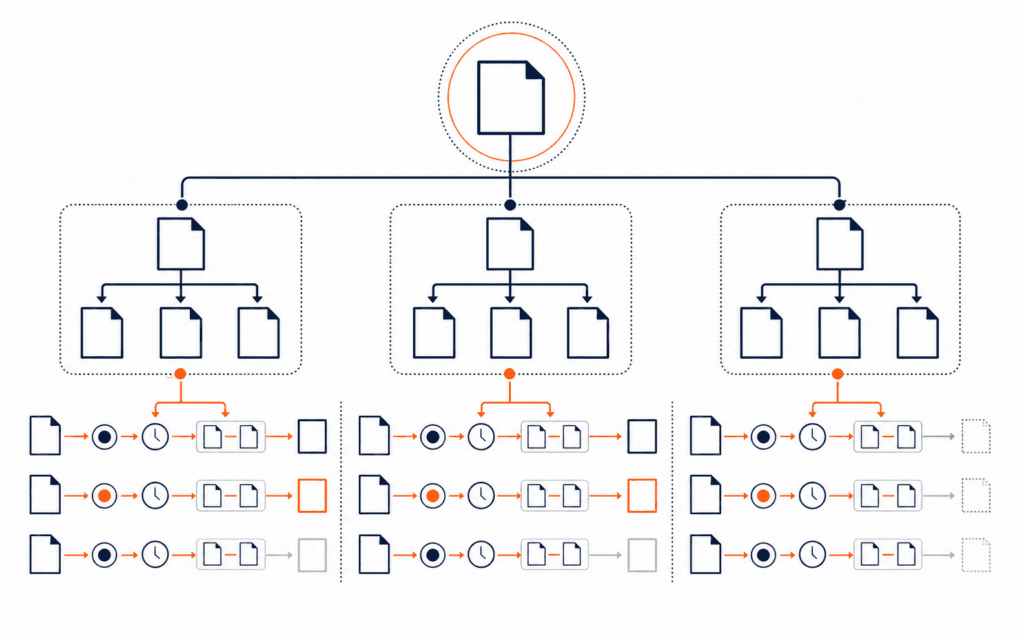
Build an SEO Keyword-to-Page Map for a Small Training Website
A keyword-to-page map assigns each important search intent to one best existing URL before you write or optimize content. Inventory the pages, group query language by meaning.


A keyword-to-page map assigns each important search intent to one best existing URL before you write or optimize content. Inventory the pages, group query language by meaning, identify the result type people expect, select one owner, record supporting pages and internal links, and resolve conflicts with evidence instead of creating a new page for every phrase.
This workshop uses a six-page training-site scenario and ends with a spreadsheet that another reviewer can audit. Each row names the intent, owner URL, supporting pages, action, evidence, and measurement date, so the map becomes a controlled editorial plan rather than a keyword list.
Do not invent search volume, difficulty, or ranking probability. Preserve live URLs unless evidence supports a migration. Course pages own enrolment and local-commercial intent; articles answer narrower informational problems and point to the appropriate course naturally.
What You Need Before You Start
Collect the public sitemap, current titles and headings, canonical URLs, navigation links, and Search Console exports if access is available. Use a spreadsheet with one row per indexable canonical page.
- A crawlable list of existing canonical URLs
- A spreadsheet and access to page titles, headings, and main content
- Search Console query and page data when available
- A verified list of current courses or services and conversion actions
Keep these boundaries in place:
- No fabricated keyword metrics
- No mass title rewriting before ownership is settled
- No separate page for each synonym
- No deletion, redirect, or URL change without a reviewed migration plan
1. Build the canonical page inventory
Action and reason: List each indexable URL with page type, title, main heading, purpose, conversion action, canonical target, status, and current internal-link sources. Keyword decisions made without the existing inventory create duplicate pages and ignore technical ownership problems.
Inputs: The sitemap, navigation, page source, and a small crawl or manual review. Treat these inputs as the working boundary; adding an unreviewed dependency changes the task and should trigger a new check.
Expected output: One row per canonical page with non-indexable, redirected, duplicate, and orphan candidates flagged. Keep the artifact with the project so another person can inspect the decision instead of relying on a finished screenshot.
Verification: Opening every priority URL, confirming HTTP success, canonical consistency, indexability, and at least one crawlable internal path. Record the input, expected result, observed result, and decision. A pass is credible only when another person can repeat the same check.
Failure condition: The sheet contains parameter URLs, redirects, or two rows for the same canonical page. Correction: Normalize to the canonical owner and keep alternate URLs in a separate technical-issue column. Repeat the original verification after the correction and retain the failed observation as part of the evidence trail.
2. Define business roles before query themes
Action and reason: Label each page as homepage, course, supporting article, admissions, contact, or policy and state the single action it should help a reader complete. The same phrase has different value when the page must sell a course, solve a technical problem, or explain an application step.
Inputs: The verified course list, audience, locations, and conversion flow. Treat these inputs as the working boundary; adding an unreviewed dependency changes the task and should trigger a new check.
Expected output: A page-role ledger with commercial intent reserved for course and admissions pages. Keep the artifact with the project so another person can inspect the decision instead of relying on a finished screenshot.
Verification: Checking that every article can remain useful without pretending to be a course landing page. Record the input, expected result, observed result, and decision. A pass is credible only when another person can repeat the same check.
Failure condition: A blog post and course page both target enrolment intent or a generic article has no relationship to the institute purpose. Correction: Return commercial ownership to the course page and narrow the article to a distinct question, project, diagnosis, or decision. Repeat the original verification after the correction and retain the failed observation as part of the evidence trail.
3. Create query families by meaning and intent
Action and reason: Group real or hypothesized phrases into concept families, then label informational, comparative, local-commercial, transactional, or navigational intent without treating synonyms as separate topics. A map needs semantic ownership, while a raw list encourages thin pages and keyword stuffing.
Inputs: Course terminology, Search Console queries, customer questions, and current result patterns. Treat these inputs as the working boundary; adding an unreviewed dependency changes the task and should trigger a new check.
Expected output: Query families with one primary need, audience, stage, and expected page type. Keep the artifact with the project so another person can inspect the decision instead of relying on a finished screenshot.
Verification: Searching representative phrases and recording whether results favor guides, course pages, lists, tools, or local providers. Record the input, expected result, observed result, and decision. A pass is credible only when another person can repeat the same check.
Failure condition: The family mixes learn-how queries with enrol-now queries or relies only on one wording variant. Correction: Split by intent and expected outcome, then keep lexical variants together under the correct family. Repeat the original verification after the correction and retain the failed observation as part of the evidence trail.
4. Assign one owner and supporting pages
Action and reason: Map each priority family to the URL that best satisfies its intent, then name articles that add context and should link to that owner. Clear ownership reduces internal competition and gives supporting content a purposeful route toward the next decision.
Inputs: The page-role ledger, query families, content quality, and link graph. Treat these inputs as the working boundary; adding an unreviewed dependency changes the task and should trigger a new check.
Expected output: One owner URL, supporting URLs, preferred anchor themes, and exclusions for each family. Keep the artifact with the project so another person can inspect the decision instead of relying on a finished screenshot.
Verification: Reading the owner as a searcher and checking that it answers the need without depending on hidden navigation. Record the input, expected result, observed result, and decision. A pass is credible only when another person can repeat the same check.
Failure condition: Multiple owners are marked primary or every family is mapped to the homepage. Correction: Choose the most specific useful page, revise its scope where justified, and let broader pages support rather than compete. Repeat the original verification after the correction and retain the failed observation as part of the evidence trail.
5. Resolve overlap with a decision ledger
Action and reason: Compare pages that share queries, headings, and outcomes, then choose keep separate, refocus, consolidate, canonicalize, redirect, or no change with a written reason. Cannibalization is a page-purpose problem and cannot be solved safely by deleting content whenever two pages mention the same words.
Inputs: The map, page content, Search Console page-by-query evidence, backlinks where available, and conversion role. Treat these inputs as the working boundary; adding an unreviewed dependency changes the task and should trigger a new check.
Expected output: A conflict ledger with risk, evidence, selected action, owner, and rollback note. Keep the artifact with the project so another person can inspect the decision instead of relying on a finished screenshot.
Verification: Filtering Search Console by a query to see which URLs appeared and comparing their intents and trends over the same period. Record the input, expected result, observed result, and decision. A pass is credible only when another person can repeat the same check.
Failure condition: A successful URL is changed because another page uses similar vocabulary or a weak page is retained without a distinct purpose. Correction: Use page-and-query evidence, preserve equity, and revise only when ownership and expected benefit are clear. Repeat the original verification after the correction and retain the failed observation as part of the evidence trail.
6. Identify genuine gaps and reject false gaps
Action and reason: Mark a new-page opportunity only when no existing URL can satisfy a distinct useful intent after reasonable revision. Publishing every variation creates commodity content and weakens the site’s primary training purpose.
Inputs: Unowned query families, audience questions, course coverage, and existing article outcomes. Treat these inputs as the working boundary; adding an unreviewed dependency changes the task and should trigger a new check.
Expected output: A short gap queue with unique outcome, proposed owner type, evidence need, and duplicate check. Keep the artifact with the project so another person can inspect the decision instead of relying on a finished screenshot.
Verification: Writing a one-sentence purpose and expected reader artifact that no current page already owns. Record the input, expected result, observed result, and decision. A pass is credible only when another person can repeat the same check.
Failure condition: The proposed page differs only by location repetition, synonym, year, or reordered headings. Correction: Merge the phrase into the existing owner, improve that page, or discard the proposal. Repeat the original verification after the correction and retain the failed observation as part of the evidence trail.
7. Plan contextual internal links
Action and reason: Add crawlable links from supporting pages to the owner and between genuinely useful related resources using concise descriptive anchors. Internal links help people and search engines discover relationships, but forced exact-match anchors reduce clarity and can look manipulative.
Inputs: The owner map, current link graph, and reader journey. Treat these inputs as the working boundary; adding an unreviewed dependency changes the task and should trigger a new check.
Expected output: Source URL, destination URL, placement context, anchor theme, and reason for every proposed link. Keep the artifact with the project so another person can inspect the decision instead of relying on a finished screenshot.
Verification: Opening the rendered page, confirming an a element with href, checking the destination, and reading the sentence without SEO terminology. Record the input, expected result, observed result, and decision. A pass is credible only when another person can repeat the same check.
Failure condition: Links are placed in a repeated block, use stuffed anchors, or point to retired pages. Correction: Move the link into the relevant explanation, use natural wording, and verify the live destination before publishing. Repeat the original verification after the correction and retain the failed observation as part of the evidence trail.
8. Prioritize changes and preserve a baseline
Action and reason: Score actions by user value, business relevance, evidence strength, risk, and effort, then record current clicks, impressions, CTR, and query-page ownership where data exists. A map is useful only when it controls implementation and makes later results interpretable.
Inputs: The action ledger, Search Console date range, analytics where available, and release capacity. Treat these inputs as the working boundary; adding an unreviewed dependency changes the task and should trigger a new check.
Expected output: A sequenced plan with owner, change scope, baseline date, verification date, and rollback path. Keep the artifact with the project so another person can inspect the decision instead of relying on a finished screenshot.
Verification: Ensuring high-risk URL or consolidation work has stronger evidence and review than content or link clarification. Record the input, expected result, observed result, and decision. A pass is credible only when another person can repeat the same check.
Failure condition: All pages change at once with no baseline or success condition. Correction: Batch by risk and intent cluster, preserve snapshots, and define the observation window before implementation. Repeat the original verification after the correction and retain the failed observation as part of the evidence trail.
9. Review outcomes without chasing daily noise
Action and reason: Compare query and page trends after the agreed window, inspect which URLs Google shows for priority families, and record keep, investigate, improve, or revert decisions. Search performance is delayed and variable, so immediate position checks do not prove whether ownership improved.
Inputs: The baseline, comparable Search Console filters, release log, and conversion observations. Treat these inputs as the working boundary; adding an unreviewed dependency changes the task and should trigger a new check.
Expected output: A dated review memo tied to each change rather than a site-wide guess. Keep the artifact with the project so another person can inspect the decision instead of relying on a finished screenshot.
Verification: Using consistent country, device, search type, query, page, and date filters and noting anonymized or low-volume limitations. Record the input, expected result, observed result, and decision. A pass is credible only when another person can repeat the same check.
Failure condition: A decision is based on one manual search, one day, or average position alone. Correction: Use comparable trends in impressions and clicks, inspect page ownership, and extend the window when evidence remains weak. Repeat the original verification after the correction and retain the failed observation as part of the evidence trail.
Review the Evidence Before You Call It Complete
Run the work as a review, not as a presentation. Start with the promised outcome: Every priority query family has one primary owner URL. Ask a second person to follow the documented inputs and checks without receiving a private explanation. Record where they cannot reproduce a result, where a decision lacks evidence, and where the artifact depends on hidden knowledge. Those gaps are part of the work and should be corrected before screenshots or portfolio copy are finalized.
Use the remaining acceptance criteria as release conditions: Course pages retain commercial and enrolment intent; Supporting articles have distinct outcomes and contextual links; Every overlap has a documented keep, revise, consolidate, or migrate decision; The implementation queue includes baseline, risk, owner, verification date, and rollback notes. A failed condition should identify the smallest upstream step that owns the defect. Correct that step, repeat the same check, and preserve the before-and-after result. This review discipline is what turns an exercise into credible evidence of skill without claiming client experience, production success, or testing that did not occur.
Completion Standard
The map is complete when every priority intent has one defensible owner, every conflict has an evidence-based action, and every proposed new page proves a unique purpose.
- Every priority query family has one primary owner URL
- Course pages retain commercial and enrolment intent
- Supporting articles have distinct outcomes and contextual links
- Every overlap has a documented keep, revise, consolidate, or migrate decision
- The implementation queue includes baseline, risk, owner, verification date, and rollback notes
SEO learners in Gujrat, Punjab, Pakistan can use local course and admissions intent in the scenario, but location belongs where it helps the searcher choose a physical training option; it should not be repeated across unrelated technical sections.
When you want guided review of the complete workflow, the Search Engine Optimization course provides a structured path from fundamentals to supervised project evidence. The article remains a self-contained method; the program is the next step for learners who need feedback, correction, and repeated practice.
Sources And Verification Notes
- Creating Helpful, Reliable, People-First Content: Supports assigning pages a useful primary purpose and avoiding search-engine-first commodity content.
- Link Best Practices for Google: Supports crawlable internal links, descriptive anchor text, and contextual cross-references.
- Performance report overview: Supports query, page, country, device, click, impression, CTR, and position analysis.
- Performance report common tasks: Supports reviewing which pages appeared for a query and focusing on trends rather than isolated position checks.
FAQ
Does every keyword need its own page?
No. Group lexical variants that share the same intent and outcome. Create a page only when no existing URL can satisfy a distinct useful need after reasonable revision.
How can I detect keyword cannibalization in Search Console?
Filter to a priority query, open the Pages dimension, and compare which URLs appeared over a consistent period. Then inspect whether those pages genuinely compete for the same intent before changing anything.
Should blog posts target course-enrolment keywords?
Course pages should own direct enrolment and local-commercial intent. Blog posts should solve narrower problems, projects, comparisons, or decisions and link naturally to the relevant course when guided training is a logical next step.
Want to Build Practical Technology Skills?
Explore RisingEdge courses designed to help students learn real skills, build projects, and prepare for career opportunities.